
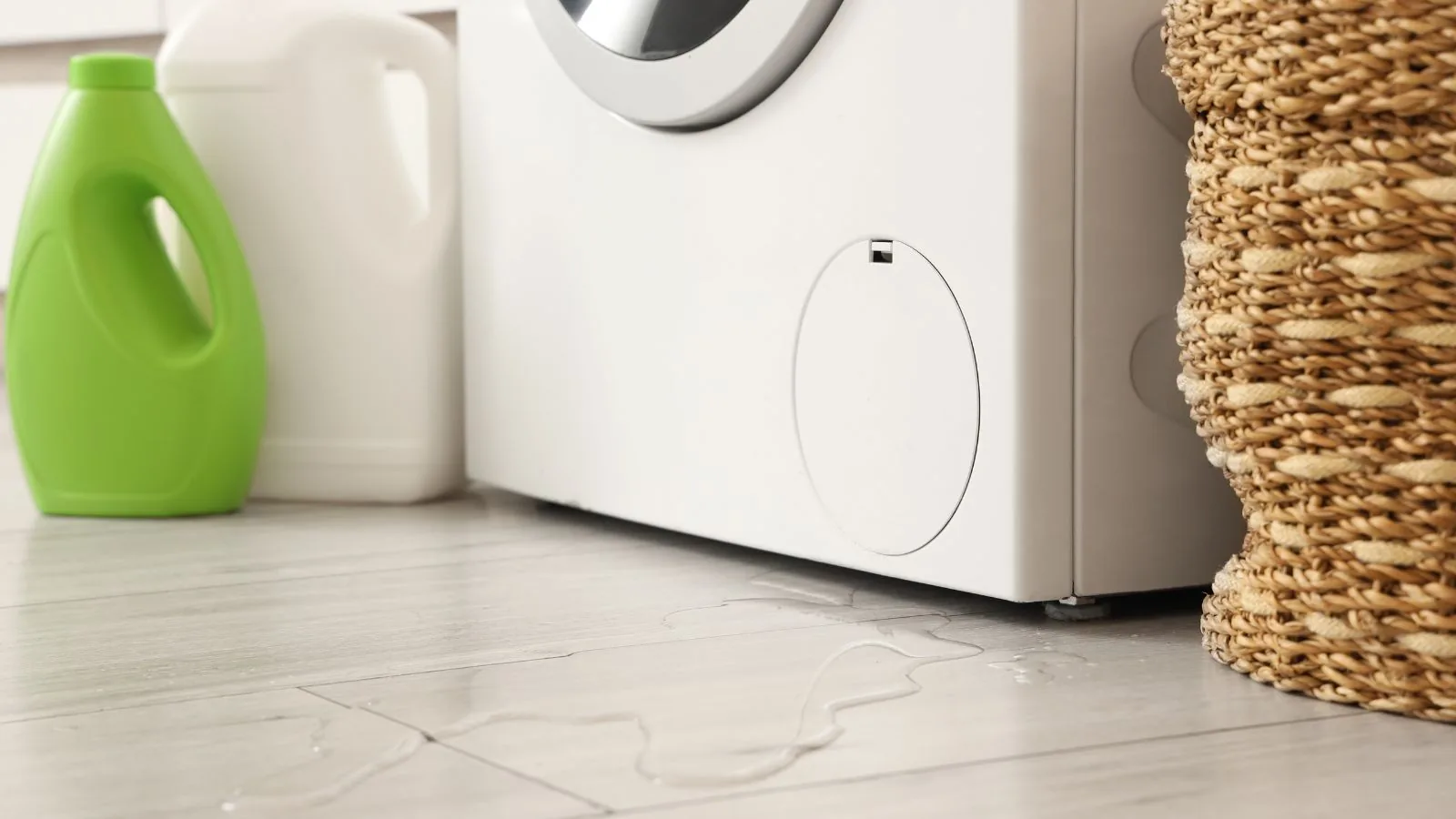
Appliance leak water damage in Machesney Park, IL often starts with a washing machine hose, a dishwasher supply line or a refrigerator ice maker line. Turn off the appliance valve or the main water supply, unplug the unit if the cord is dry and reachable, and call the 24/7 line.
This page is about the appliance as the source. Cabinet and sink-area damage in a kitchen belongs on the kitchen water damage page.
What to do when an appliance leaks
Find the shutoff valve behind or beside the appliance and close it. If there is none, close the main. Unplug the appliance only if the plug and floor are dry. A wet outlet is an electrical hazard, and the panel is the safer place to cut power.
Mop up what you can, but keep a record. Photograph the leak source, the wet floor and any moved items before cleanup.
- Close the appliance valve or the main.
- Unplug only if dry and safe.
- Remove items from wet floors.
- Photograph the hose, valve and water path.
Common sources and what they release
A washer supply hose can run until someone notices, often releasing many gallons. A dishwasher door seal or drain line leaks slowly into cabinets. Refrigerator ice maker lines drip behind units and under floors, often going unnoticed for weeks.
Slow leaks are especially harmful because they soak materials without obvious puddles. If water is under flooring, see the hardwood floor and carpet pages.
Gray water from washers and dishwashers
Washer and dishwasher drains can carry detergent, soil and bacteria, which puts that water in Category 2 under the ANSI/IICRC S500 standard. Category 2 water can often be dried, but porous materials such as carpet pad are frequently replaced.
If water has sat for days or has a smell, treat it as contaminated and let the crew decide what stays.
Water damage in progress? Call the 24/7 line and ask what to do before anyone arrives.
☎ Call (815) 314-9281 nowDrying behind and under appliances
Appliances sit against walls and over subfloors, so water hides. The crew pulls the unit, removes baseboards if needed, and checks wall cavities and flooring with moisture meters. Small holes may be drilled to dry the cavity.
Air movers and dehumidifiers run until readings are normal. Ask for readings in writing to support your claim.
Slow appliance leaks and mold risk
A leak that runs for weeks behind a washer or under a dishwasher gives mold the moisture it needs. Early signs are a musty smell in a laundry room, baseboards that look swollen, and flooring that has begun to lift at the seams.
If you find these signs, do not scrub or paint over the area. Dry it first, because treatments applied to damp materials fail. If growth is already visible, the mold remediation page explains the containment and removal approach.
Cost factors
Appliance leaks can be small or large depending on duration.
- How long the leak ran before discovery.
- The flooring under and around the appliance.
- Whether cabinets or walls are wet.
- Whether the leak reached a lower floor.
- Days of drying equipment.
Scope and price are explained before work starts. A call to the 24/7 line is the way to find out what your case needs.
Insurance and appliance leaks
A sudden hose failure is often covered, while a slow leak over months often is not. Insurers also look at maintenance. If you replaced hoses recently, keep that record.
Keep the failed part if you can, and file promptly. Ask your insurer whether the appliance itself is covered separately.
Preventing the next leak
Replace rubber washer hoses with braided stainless versions, check dishwasher and refrigerator lines yearly, and know where each shutoff is. A water leak sensor under an appliance costs little and gives early warning.
Homes in Machesney Park built before 1980 often have laundry in basements, where a leak is not seen right away. If water reached a basement floor, see basement water damage cleanup.
Frequently asked questions
Check for soft flooring, musty smells, and baseboard staining. A moisture meter finds hidden water.
Not until the leak is fixed and the area is dry.
Depends on the material and the time wet. Clean-water leaks caught early can often be dried in place.
Often, if sudden. Ask your insurer.
Yes. Hose failures and drain backups happen at night. The dispatch line is answered 24/7, and same-day response is offered when available.
Still deciding what to do next? The 24/7 line at (815) 314-9281 is answered at any hour, and you can describe the situation in plain words.