
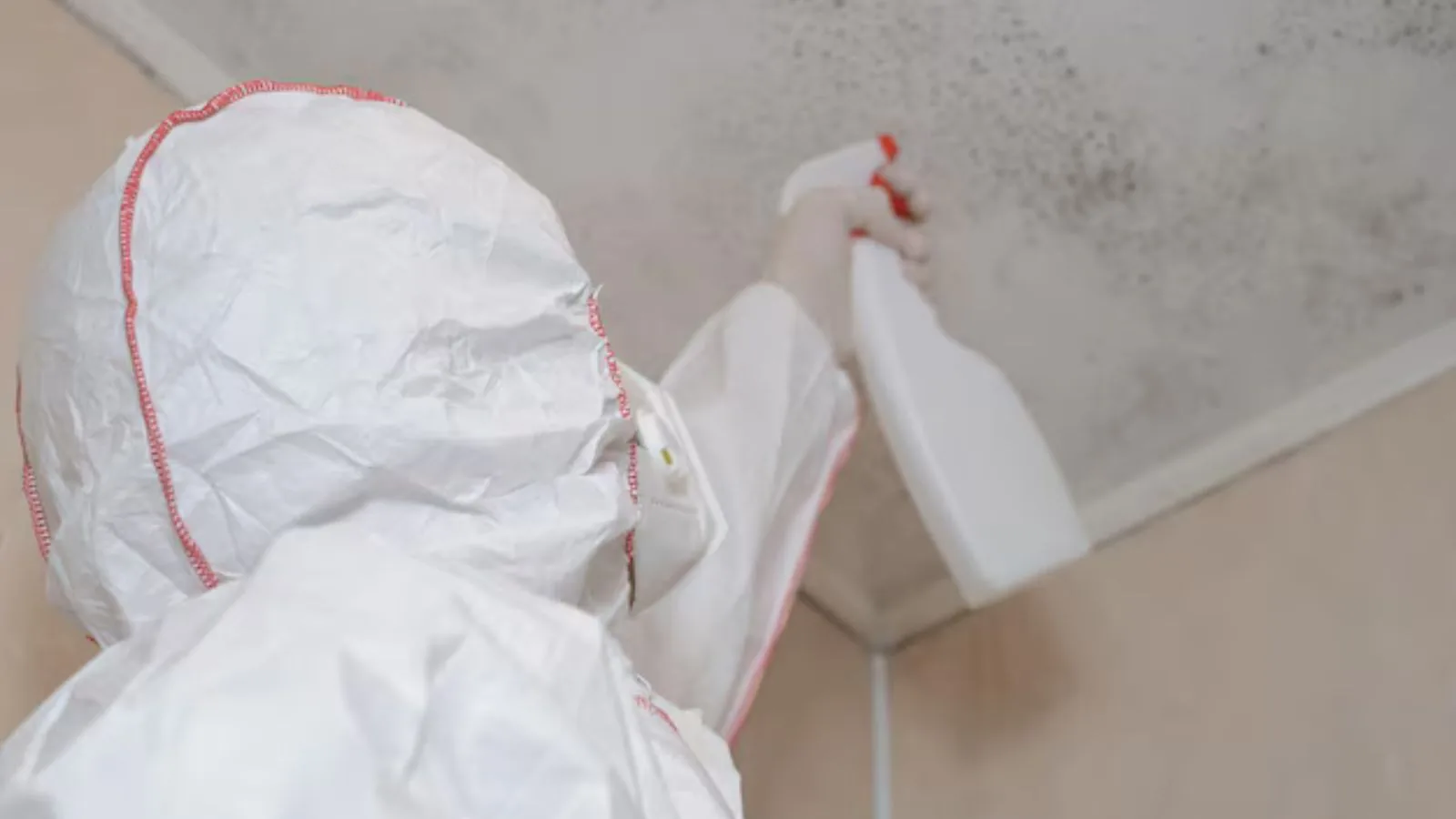
Mold remediation in Machesney Park, IL deals with visible or suspected mold growth, usually after a leak, a flood or long-term dampness. Mold needs moisture, so the first step is always to find and fix the water source, and the second is to contain and remove the growth.
Testing and remediation follow the ANSI/IICRC S520 standard for professional mold remediation. Health questions belong to a physician.
Is that dark spot on my wall or ceiling mold?
Dark spots in a bathroom corner, fuzzy patches on a closet wall, or a musty smell after a leak are the way most people first notice a problem. The trade term is mold remediation, and it means containing the area, removing contaminated materials, cleaning surfaces and fixing the moisture that fed the growth.
Where mold appears after water damage
Mold needs moisture, organic material and time. After a leak, the places it appears first are the underside of a wet ceiling, the back of drywall, inside cabinets, behind baseboards, under carpet pad and on joists in a crawl space.
Most callers about mold mention a recent leak from a toilet, a sink, an air conditioner condensate line, a roof or an exterior wall. Fixing the leak comes before any cleanup, because cleaning a wall that keeps getting wet only delays regrowth.
- Bathrooms: ceiling corners, around showers and behind toilets.
- Closets on exterior walls or below roof leaks.
- Basements: lower walls, carpet pad and stored cardboard.
- Attics: underside of roof decking after leaks or condensation.
What S520 practice involves
ANSI/IICRC S520 is the published standard for professional mold remediation. It covers assessment, containment, removal and clearance. Ask any company whether its crews work to it, and ask for the plan in writing before work starts.
In practice, the crew sets containment with plastic and negative air machines, uses HEPA filtration, removes materials that are contaminated and cannot be cleaned, cleans remaining surfaces and dries the area.
Testing, inspection and clearance
An inspection looks at where moisture entered and how far growth has spread. Testing can include air or surface samples, and independent clearance testing after remediation confirms that the work is complete. Independent means the company that tests is not the company that did the removal.
Buyers and lenders sometimes ask for clearance before a sale or loan, and what counts is up to them. Ask your agent or lender what documents they will accept, and do not assume a result will satisfy anyone.
Water damage in progress? Call the 24/7 line and ask what to do before anyone arrives.
☎ Call (815) 314-9281 nowIllinois rules for mold work
Illinois passed the Mold Remediation Registration Act, Public Act 103-0893, which requires mold remediation parties to register and show proof of financial responsibility. The Illinois Department of Public Health says the new requirements are not in effect until rulemaking is adopted, and that professionals are not currently required to register with IDPH.
Rules can change, so check the IDPH website for current status and ask any company about its registration when it becomes required. Keep this in mind before hiring.
Why drying comes first
Mold does not grow on dry materials. When water damage is dried quickly, mold often never gets a start. EPA guidance says to dry water-damaged areas within 24 to 48 hours to help prevent mold growth.
If wet materials stay wet for days, mold becomes more likely. That is why structural drying and dehumidification matters and why water extraction should happen fast.
Cost factors
Mold work varies with how far the growth has spread.
- Area affected and materials involved.
- Containment and air filtration needs.
- Testing and clearance.
- Drywall, insulation or carpet that must be removed.
- Repair work after removal, which is separate.
Scope and price are explained before work starts. Call the 24/7 line and describe what you see.
Insurance and mold
Some policies cover mold that results from a covered water loss, and some limit or exclude it. Mold from long-term leaks or poor maintenance often is not covered. Read your policy and ask your insurer.
Document the leak, the dates and the removal work, and keep reports from testing and clearance. Notify your insurer early.
Mold and Machesney Park housing
The village plan shows that more than 58 percent of homes date from before 1980. Older houses can have damp basements, small bathrooms with weak ventilation and older roofs, all of which raise the odds that water becomes mold.
For related causes see the AC leak page and the crawl space page. The Roscoe page explains coverage in nearby areas.
Frequently asked questions
Surface cleaning can remove stains but not the roots in porous materials like drywall. Fix the moisture, and for anything more than a small area, ask a professional.
Not always. Visible growth and a known leak may be enough to start remediation. Testing and clearance are useful when you need documentation or are unsure of the extent.
Mold needs moisture and should be removed from living spaces. Health questions belong to a physician, so ask yours if anyone in the home has concerns.
No one can promise that. The best protection is to fix moisture sources and keep humidity under control.
Still deciding what to do next? The 24/7 line at (815) 314-9281 is answered at any hour, and you can describe the situation in plain words.