
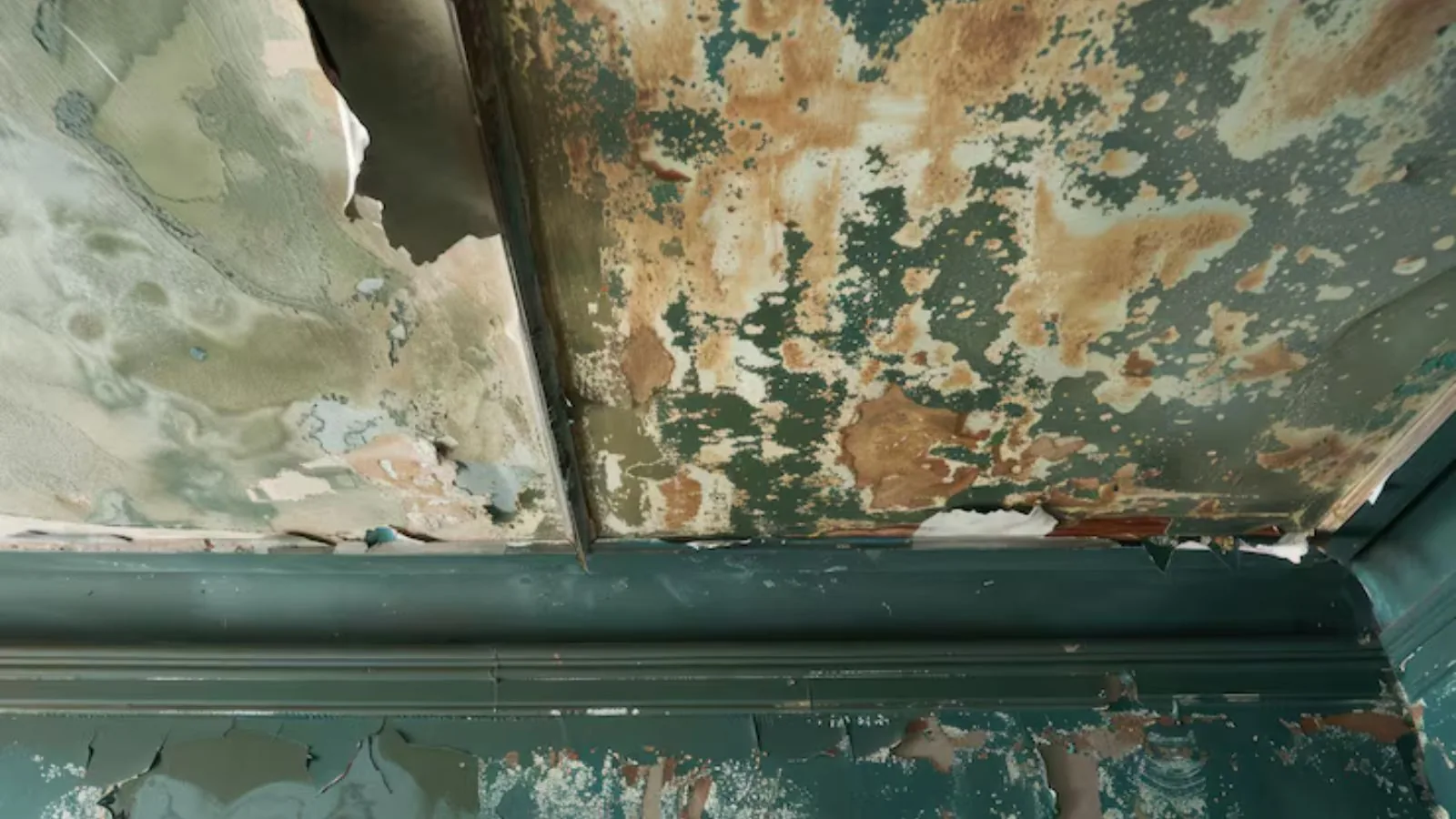
Wall and drywall water damage repair in Machesney Park, IL covers stained, bubbled, soft or crumbling drywall, plus the baseboards, insulation and framing behind it. Drywall acts like a sponge, so water can climb several inches above a visible wet line.
If paint is bubbling or a wall feels soft, find the source before you paint over it. The source might be a pipe, a roof, a window or the floor below.
Signs water is in the wall
Common signs are brown stains with defined edges, paint that bubbles or peels, baseboards that swell, a musty smell and drywall that feels soft or crumbles when pressed. A wall that feels cold and damp may be wet inside even if the surface looks fine.
A moisture meter confirms what the eye cannot. A thermal camera shows cooler wet areas behind paint.
- Stains with a visible ring or edge.
- Bubbled, peeling or cracked paint.
- Swollen baseboards and trim.
- Soft, crumbling or sagging drywall.
Find the source first
A wall will not dry while it keeps getting wet. Check plumbing on the other side, window flashing, roof lines and floor-level leaks. Water often travels, so a stain may be far from the source.
If a pipe inside the wall is leaking, burst pipe cleanup covers the cause. If the stain is on a ceiling or upper wall from the roof, see ceiling water damage repair.
What stays, what comes out
Drywall that is only damp and was caught within a day or two can sometimes be dried in place with injection drying. Drywall that is soft, stained through or contaminated is cut out. A flood cut removes the bottom foot or two of wall above the water line.
Wet insulation is removed because it holds water against framing. Framing and sheathing are dried and checked for mold before new drywall goes up.
Water damage in progress? Call the 24/7 line and ask what to do before anyone arrives.
☎ Call (815) 314-9281 nowDrying and repair steps
After removal, air movers and dehumidifiers dry the cavity, and moisture readings confirm it is ready. New insulation, drywall, tape, mud, primer and paint follow. Texture matching can be the hardest step in older homes.
Always dry first. Painting over a damp wall traps moisture and brings stains back. The structural drying page explains how readings guide each step.
Cost factors
Wall repair cost depends on how much comes out and how much goes back.
- Linear feet of wall and the height of the cut.
- Insulation type and amount.
- Baseboards, trim and paint matching.
- Whether mold is present.
- Drying days.
Scope and price are explained before work starts. If you are not sure whether the wall is wet inside, call the 24/7 line.
Insurance and wall damage
Sudden causes such as a pipe burst or storm damage are often covered by homeowners insurance. Slow leaks and neglected maintenance often are not. Insurers may want photos before drywall comes out.
Ask your adjuster whether painting an entire wall or room is included, because paint matching can be part of the claim.
Walls in older Machesney Park homes
More than 58 percent of village homes date before 1980, and older houses may have plaster or older drywall with lead-based paint concerns. Drywall and paint from that era may need extra care before cutting or sanding. Ask the crew about testing if your home predates 1978.
Walls next to kitchens or laundry are common leak sites. See kitchen water damage and appliance leak water damage for those causes.
Standards and sources behind this page
ANSI/IICRC S500 guides whether wet drywall and insulation are dried in place or removed, based on water category and moisture readings. EPA guidance on 24 to 48 hour drying explains why soft drywall is cut out quickly.
Frequently asked questions
Only after the source is fixed and the wall is fully dry. Painting over a wet wall hides the problem and traps moisture.
Water can wick several inches above a visible wet line. A moisture meter finds the real boundary.
Often, but not always. Heat, poor prep and humidity can also cause it. A moisture meter helps separate the causes.
Not always. Painted wood baseboards may be dried and reused, but swollen or stained pieces are usually replaced.
Still deciding what to do next? The 24/7 line at (815) 314-9281 is answered at any hour, and you can describe the situation in plain words.