
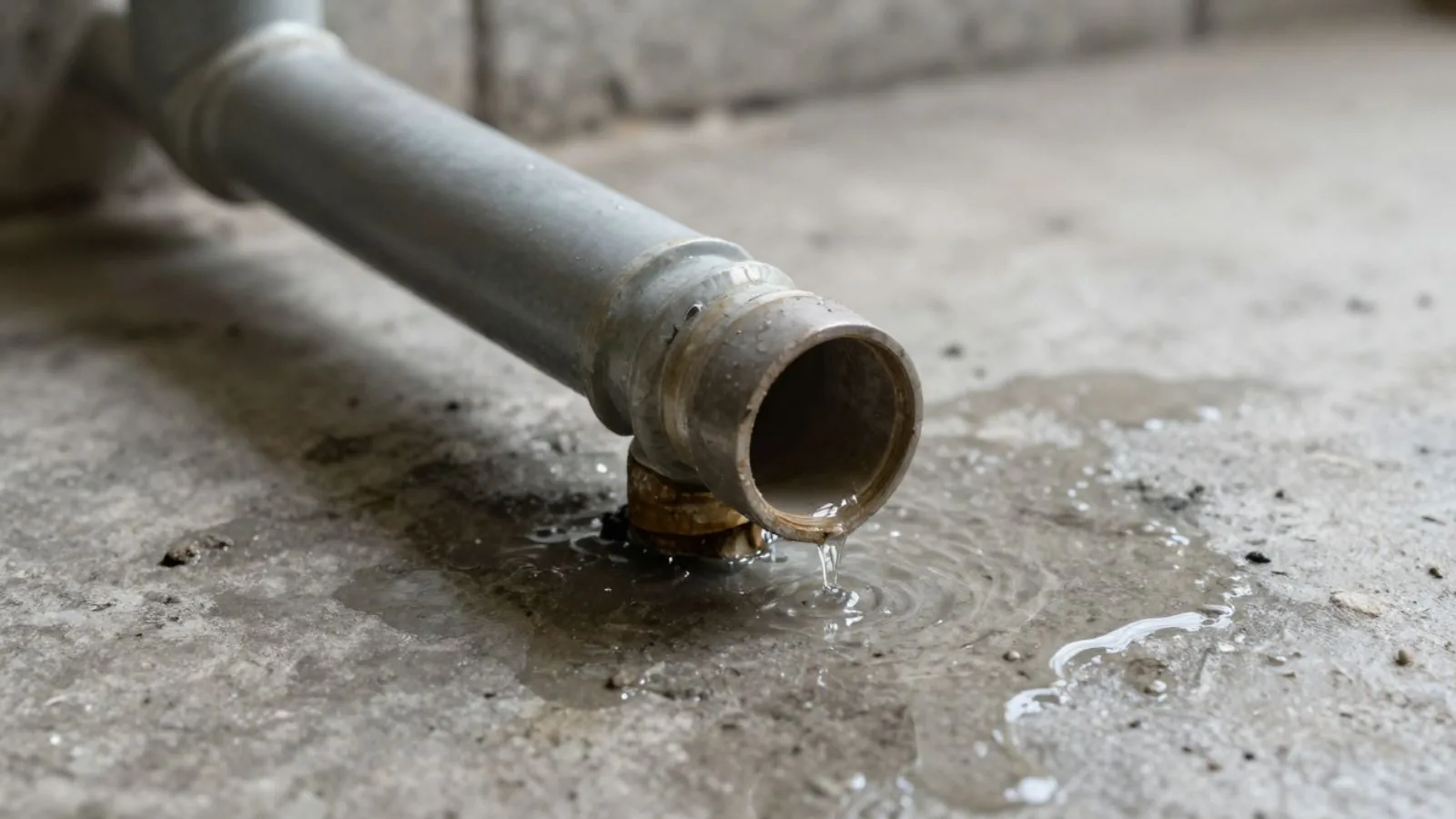
Frozen pipe water damage in Machesney Park, IL usually shows up when the ice melts, not while the pipe is frozen. A split in the pipe stays plugged by ice until temperatures rise, then the water starts to flow. If you hear running water or see a stain after a cold snap, shut off the main and call the 24/7 line.
This page covers frozen lines that cracked and the cleanup afterward. A pipe that failed from corrosion or pressure is a burst pipe job with a different cause.
Frozen pipe emergency: what to do first
If a faucet runs slowly or not at all in freezing weather, the line may be frozen. Open the faucet so melting water has somewhere to go, and locate the main shutoff in case the pipe has already split. Never use an open flame to thaw a pipe.
If you find a split or a leak, close the main valve and call. The unit that caused the freeze, such as an unheated garage wall or an exposed crawl space line, will freeze again until the cause is fixed.
- Know where the main shutoff is before the next cold snap.
- Warm the area gently with a hair dryer or space heater placed safely away from water.
- Keep cabinet doors open under sinks on exterior walls.
- Call as soon as water appears, because thaw flows can run for hours.
How cold Machesney Park winters get
NWS climate normals for Rockford, 1991 to 2020, show about 135.8 days a year with a low at or below 32 degrees Fahrenheit and a January average low of 14.5 degrees. That is a lot of freeze and thaw cycles for pipes in exterior walls, attics and unheated spaces.
Those numbers describe the Rockford airport station, not every street in the village. They do show that freezing weather is routine here, so frozen pipe risk should be treated as ordinary, not rare.
Where frozen pipes split
Pipes seldom split where the ice is. The break usually forms downstream of the ice block, where pressure builds between the freeze and a closed faucet. That is why a split can be in a wall cavity with no visible cold spot nearby.
Typical trouble spots are exterior walls with thin insulation, pipes near attic eaves, garage ceilings, outdoor hose bibs and crawl space lines. If your problem is a ceiling leak after a thaw, the ceiling water damage page explains stains, sagging and repair.
Water damage in progress? Call the 24/7 line and ask what to do before anyone arrives.
☎ Call (815) 314-9281 nowCleanup after a frozen pipe thaws
The crew shuts the water, extracts what has pooled, and checks the path of the leak with a moisture meter. Because freeze splits are often inside walls, small inspection openings are common. Wet insulation is removed, and drywall that stayed saturated is cut out above the water line.
Air movers and dehumidifiers dry the cavity, and readings are logged each visit. A plumber repairs the pipe. Insulating the line or the wall, and sealing air leaks, helps prevent a repeat.
What affects the price
The size of the job depends on how long the thawed line ran and what it soaked.
- The number of floors and rooms the water reached.
- Whether ceilings, walls or flooring need to be opened.
- Insulation that must be replaced.
- Days of drying equipment.
- Pipe repair, which is separate from restoration.
A written scope and price is explained before work starts. The 24/7 line can start a conversation about your specific damage.
Insurance and frozen pipes
Many homeowners policies cover sudden water damage from a pipe that froze and split, but they may require reasonable steps such as keeping the house heated. A claim can be affected if the home was vacant or the heat was off, so read your policy language and ask your insurer.
Document the date, the weather and your attempts to stop the water. Photograph the split pipe before it is repaired. Keep plumber and restoration receipts together.
Frozen lines in older homes and outbuildings
In houses built before 1980, supply lines sometimes run through exterior walls where later insulation was never added. Detached garages, finished basements and rooms over garages also create cold pockets next to warm plumbing.
If water from the thaw reached a finished basement, the cleanup follows the basement water damage page. Neighbors in Rockton and Cherry Valley can use the same first steps, and the Rockton page explains coverage there.
Standards and sources behind this page
After a thaw, the water that escapes is handled under ANSI/IICRC S500, which classifies it by contamination and sets drying goals. EPA guidance says to dry water-damaged materials within about 24 to 48 hours to help prevent mold.
Frequently asked questions
If water returns at full flow after thawing and nothing is wet, the pipe may have survived. Check walls and ceilings below for stains over the next day and watch your water meter for movement with everything off.
You can warm it gently with a hair dryer after opening the faucet, but never use an open flame. If you cannot find or reach the frozen section, call a plumber.
It depends on the policy and the circumstances. Sudden damage is often covered, but conditions may apply. Ask your insurer before work starts when possible.
As soon as the water is controlled. EPA guidance says to dry water-damaged materials within 24 to 48 hours to help prevent mold.
Yes. Thaws and refreezes do not follow business hours. The 24/7 line is answered nights and weekends, and same-day response is offered when available. Close the main and call.
Still deciding what to do next? The 24/7 line at (815) 314-9281 is answered at any hour, and you can describe the situation in plain words.