
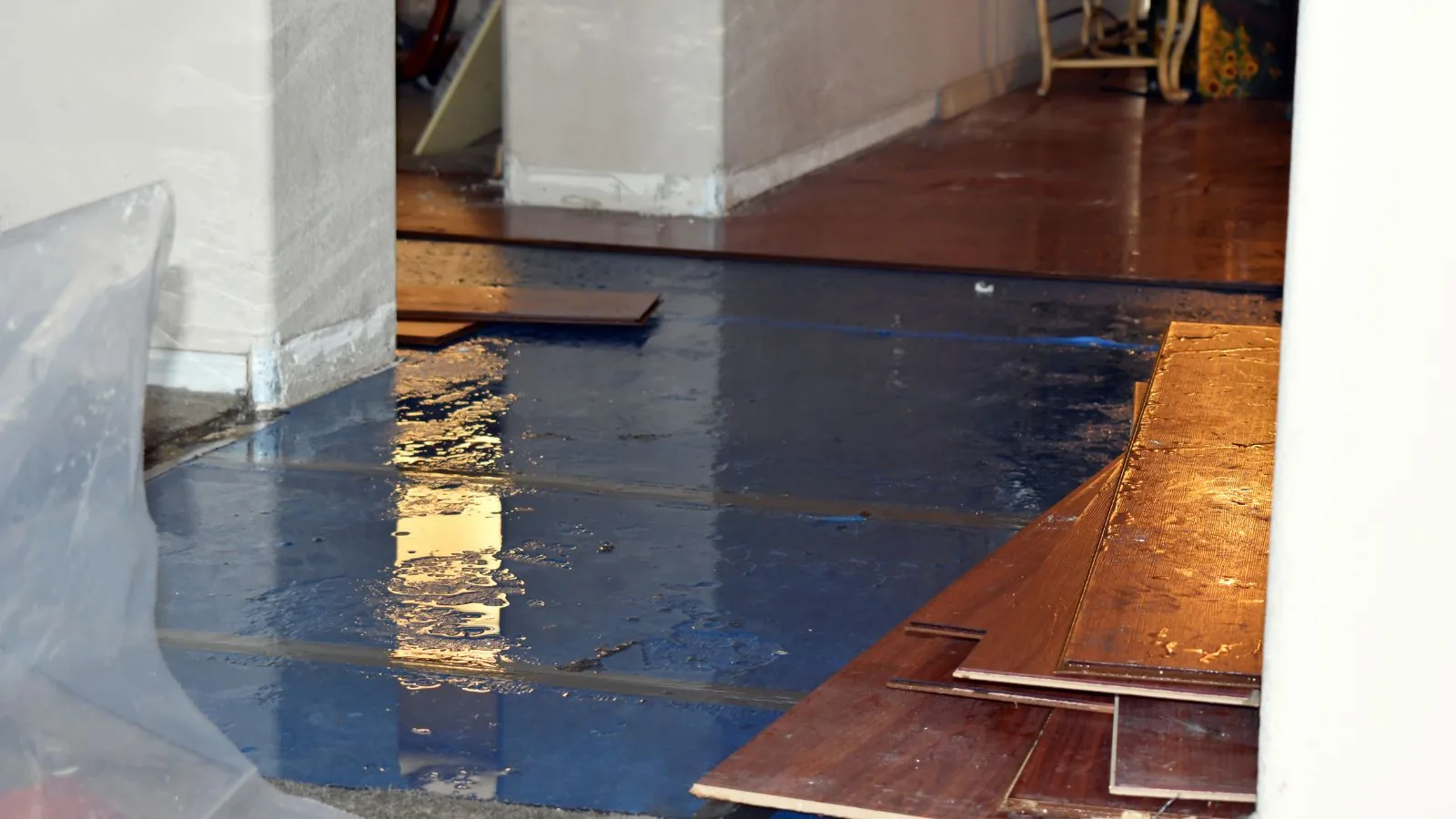
Sewage backup cleanup in Machesney Park, IL deals with contaminated water that comes up through a toilet, tub or floor drain. This is a health and safety emergency, so keep people and pets out of the area and call the 24/7 line.
Sewage is Category 3 water under the ANSI/IICRC S500 standard, which means porous materials it touches are normally removed rather than dried.
Why is dark water coming up the floor drain?
A gurgling basement drain, a toilet that overflows when a sink drains, or dark, foul water rising in a tub means a sewer line is backing up. The trade term is Category 3 sewage backup cleanup, and it means contaminated water is removed, affected materials discarded and surfaces cleaned and treated.
Sewage backup: what to do first
Stay out of the affected area. Do not touch or wade through the water without protective gear, and do not run water, flush toilets or use the dishwasher while the line is blocked, because every gallon you add ends up in the same place.
Turn off power to the area only if the panel is dry and reachable. If water may be near electrical equipment, call the utility or 911 before calling the restoration line.
- Keep children and pets out of the area.
- Do not flush or run water.
- Open windows for ventilation only if it is safe to do so.
- Take photos from a safe distance.
- Call a plumber or the sewer authority about the blockage.
Who owns the line
The village 2040 plan states that the Four Rivers Sanitary Authority is the sanitary sewer provider for Machesney Park, with its main treatment plant in Rockford. If the blockage is in the main line, the authority may be involved. If it is in your lateral, a plumber clears it.
Ask the authority or your plumber where the blockage is. Restoration deals with cleanup, and a record of who found the blockage helps an insurance claim.
What cleanup involves
The crew extracts the contaminated water, removes carpet, pad, drywall and other porous materials that were wet, and disinfects hard surfaces. Contents are sorted into those that can be cleaned and those that must be disposed of.
After cleaning, drying equipment finishes the job. For standing water in general, see water extraction, and for the drying process, see structural drying.
Water damage in progress? Call the 24/7 line and ask what to do before anyone arrives.
☎ Call (815) 314-9281 nowWhy sewage needs professionals
Sewage carries bacteria and viruses. Protective equipment, containment and legal disposal are part of safe cleanup. Home remedies like bleach and a mop do not remove contamination from porous materials, and they can spread it.
Health questions about exposure belong to a physician, so ask yours if anyone in the home was in contact with the water.
Cost factors
Sewage jobs vary widely with the volume of water and the materials it touched.
- Volume and spread of the water.
- Carpet, pad, drywall and trim that must be removed.
- Contents disposal.
- Disinfection and drying days.
- Plumbing repair or line clearing, which is billed separately.
Scope and price are explained before work starts. A call to the 24/7 line is the way to find out what your case needs.
Insurance and sewer backups
Standard homeowners policies often exclude sewer backup unless an endorsement was added. Ask your insurer whether you have one. Flood damage is usually excluded and needs a separate flood policy.
Document conditions, keep plumber invoices and ask the restoration crew to record the water category in the scope.
Backups in older neighborhoods
Older homes may have clay or cast iron laterals that are prone to root intrusion and cracks. If your home was built before 1980, which describes more than half of village homes, ask a plumber to scope the line with a camera after a backup.
If the water reached a finished lower level, the basement page covers that space. For Loves Park residents, the Loves Park page explains how that area is covered.
Frequently asked questions
A very small amount may be manageable with protective gear, but porous materials like carpet and drywall usually need removal. Professionals have the equipment and disposal methods to do it safely.
Only if your policy includes a sewer backup endorsement. Ask your insurer or agent, and do it before work starts when possible.
Removal is usually quick, and drying takes longer. The scope depends on how far the water spread and what it touched.
Once contaminated materials are removed and surfaces are treated, odors usually fade. Persistent smells can point to material that was left behind.
Yes. Backups do not wait for business hours. The dispatch line is answered at night and on weekends, and same-day response is offered when available. Keep out of the area and call.
Still deciding what to do next? The 24/7 line at (815) 314-9281 is answered at any hour, and you can describe the situation in plain words.