
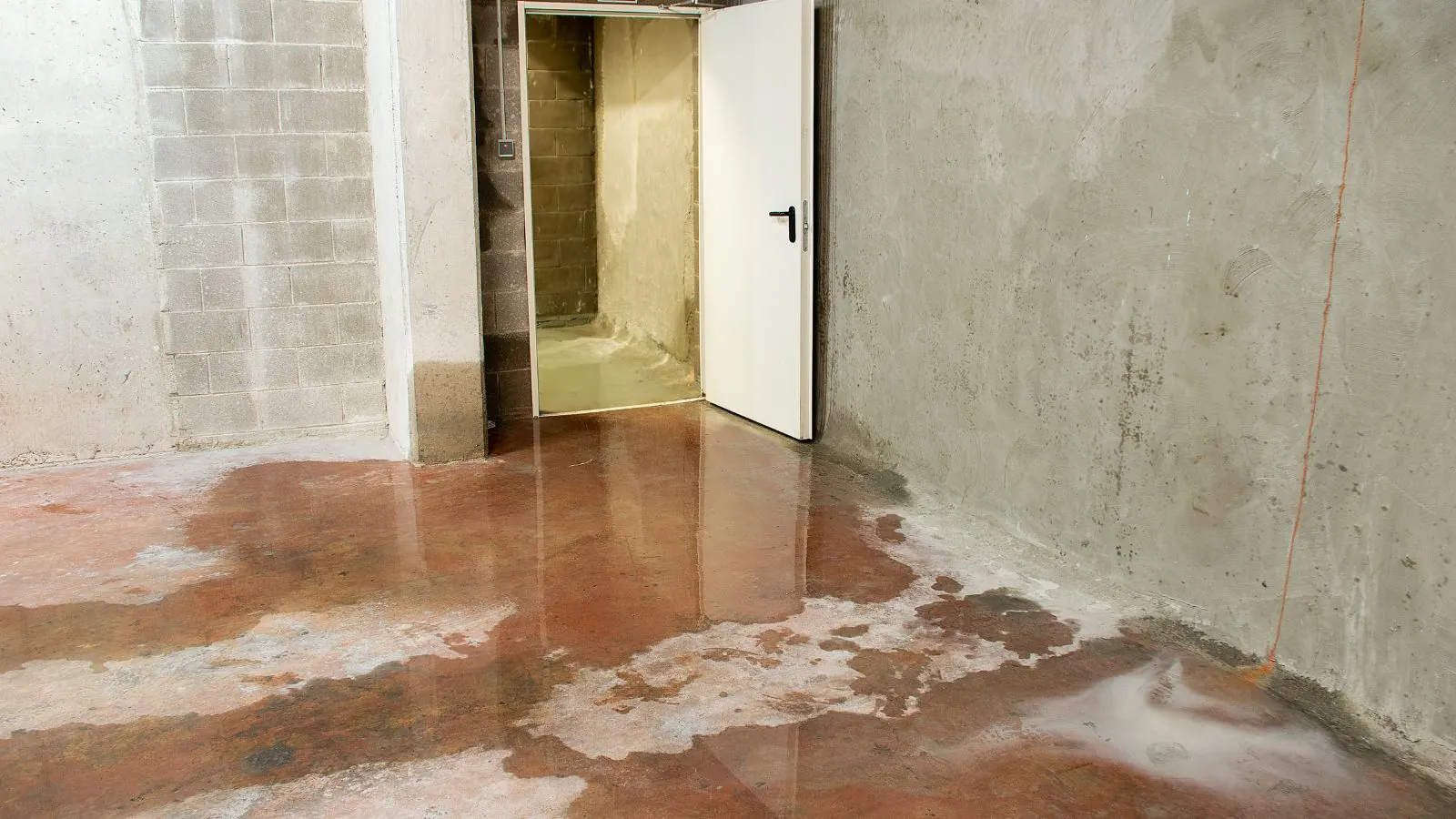
Slab leak water damage in Machesney Park, IL refers to water that escapes from a pipe running under or inside a concrete slab and then wets the floor above. The first signs are often a high water bill, a hissing sound with every fixture off, or a damp or warm spot on the floor.
If you see water on the floor, shut off the main and call the 24/7 line. A plumber finds and repairs the pipe, and restoration handles the wet floor, walls and framing.
Why is my floor wet or warm for no reason?
A damp patch on concrete, a warm spot under carpet, or a floor that keeps getting wet with no visible source can mean a pipe is leaking underneath. People describe it as a floor that feels wet for no reason. The trade term is slab leak, and it means a supply or drain line under or inside the concrete is leaking.
Slab leak emergency steps
Shut off the main water valve and watch the water meter. If the dial or digital flow indicator keeps moving with every fixture off, water is escaping somewhere in the house. Keep people off wet floors and away from outlets and appliances.
Do not break concrete yourself. A plumber uses listening equipment, pressure testing or thermal imaging to locate the pipe, and may reroute the line through walls or open the slab.
- Close the main valve and check the meter.
- Move belongings off the wet area.
- Photograph the damp spot and the meter reading.
- Call a plumber for detection and the restoration line for drying.
How common are slab leaks in the village?
No local figure is published for slab leaks in Machesney Park, so no frequency is claimed here. The village 2040 plan shows that more than 58 percent of homes were built before 1980, which is the era when metal supply lines that corrode were common.
Slab construction appears in some ranch homes, additions, garages and newer builds. If your home has a slab floor and you see the symptoms above, treat a mystery wet floor as a possible slab leak until a plumber rules it out.
What a slab leak does to a house
Water under concrete finds cracks and joints and rises into flooring, baseboards and the bottoms of walls. It can stain carpet from below, lift laminate and cup hardwood. Because the source is hidden, the leak can run a long time before it is noticed.
Moisture mapping finds the wet footprint. After the plumber repairs the pipe, restoration dries flooring and wall bases. The hardwood floor and carpet pages explain how each material responds.
Water damage in progress? Call the 24/7 line and ask what to do before anyone arrives.
☎ Call (815) 314-9281 nowRestoration after the pipe is fixed
The crew removes wet flooring that cannot be dried, sets air movers and dehumidifiers, and uses moisture readings to confirm that the slab and wall bases are dry. Concrete holds moisture for a long time, so drying can take longer than a surface spill.
If the plumber opened the slab to reach the pipe, patching and refinishing are repair steps that follow drying. Ask for the moisture readings in writing before any new flooring is installed over the slab.
Cost factors
Slab leak work involves both plumbing and restoration, and the two are priced separately.
- Leak detection and the pipe repair or reroute, billed by the plumber.
- Slab opening and patching, if it is needed.
- Flooring that must be removed and replaced.
- Drying time for a slab and the surrounding walls.
- Whether mold has grown during a long leak.
Scope and price for the water work are explained before work starts. Call the 24/7 line and describe what you see to start that conversation.
Insurance and slab leaks
Coverage varies a lot. Some policies cover resulting water damage but not the cost to find or repair the pipe. Others exclude long-term leakage entirely. Read your policy language and ask your insurer what applies.
Keep the water bill history, the plumber report and photographs of the wet floor. A rising bill that predates the stain helps show when the leak began.
If you are unsure it is a slab leak
A basement floor wet from groundwater or a failed sump pump can look similar. The basement page covers that case, and a plumber with a moisture meter can tell the difference.
Neighbors in Rockford and Cherry Valley can use the same steps. The Rockford page explains how that area is covered.
Standards and sources behind this page
Drying wet slab edges, wall bases and flooring follows ANSI/IICRC S500. The standard expects moisture readings on each visit, and EPA guidance on drying within 24 to 48 hours applies once the leak is stopped.
Frequently asked questions
Common signs include a hissing or running sound with fixtures off, a warm spot on the floor, a sudden rise in the water bill and flooring that stays damp. A plumber confirms the leak and finds its location with equipment.
No. A plumber repairs or reroutes the pipe. Restoration removes water, dries the structure and repairs what the water damaged, and the two trades work in sequence.
Usually not, unless water is near electrical equipment or the floor is unsafe to walk on. Keep children and pets off wet areas and stay clear of outlets.
Yes, if wet flooring or wall bases stay wet. EPA guidance says to dry water-damaged areas within 24 to 48 hours to help prevent mold growth, so drying early matters.
Yes. Water does not stop at night. The dispatch line is answered 24/7, and same-day response is offered when available. Close the main first, then call.
Still deciding what to do next? The 24/7 line at (815) 314-9281 is answered at any hour, and you can describe the situation in plain words.