
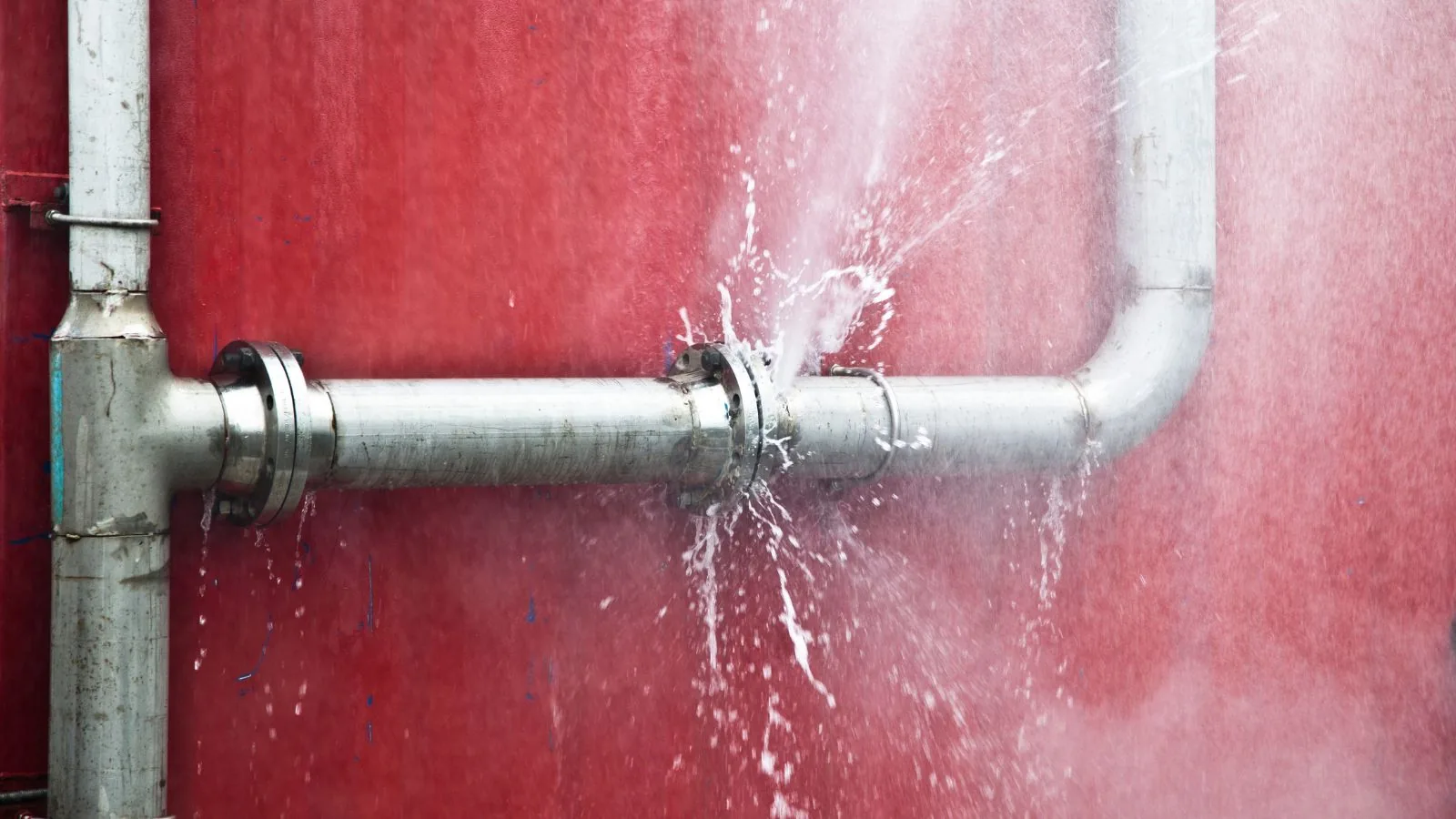
A burst pipe in a Machesney Park, IL home is an emergency from the first minute, because a pressurized supply line keeps pushing water until someone closes a valve. Shut off the main, open a faucet to drain pressure, and call the 24/7 line for cleanup and drying.
This page is about the source: a pressurized line that split, cracked or let go at a fitting. If the pipe froze first, the frozen pipe page covers the thaw and the hidden damage that follows.
What to do in the first ten minutes
Find the main water shutoff and close it. In most houses it sits where the water line enters, often near the water meter in a basement or utility area. Turn the handle clockwise until it stops. A lever valve is closed when the handle sits across the pipe.
If the ceiling below a leak is bulging, do not stand under it. A sagging ceiling can hold many gallons and drop without warning. Poke a small hole only if you can do it from a safe angle with a bucket ready, or leave it for the crew.
- Shut off the main water valve, then open the lowest faucet to drain pressure.
- Switch off power to wet rooms only if the panel is dry and reachable.
- Move rugs, electronics and paper off wet floors and away from walls.
- Photograph the pipe, the water and the damage before cleanup starts.
Why supply lines fail
Pipes burst for a handful of reasons. Corrosion thins old metal lines from the inside, a joint soldered or glued poorly years ago finally lets go, or pressure spikes crack a fitting. Freezing is the most famous cause in northern Illinois, and it has its own page.
Pipe repair is plumbing work. Restoration handles the water, the wet materials and the drying, and the plumber fixes the pipe. Many jobs need both, and the order matters: stop the source, remove the water, then repair.
Where burst pipe water goes
Water from a split line follows gravity and framing. It runs down inside wall cavities, soaks insulation, pools on the subfloor and drips through light fixtures below. A leak in an upstairs bathroom can show up as a stain in the kitchen ceiling days later.
Thermal imaging and moisture meters trace that path. Visible damage is rarely the whole picture, which is why the assessment includes opening small inspection holes in suspect walls. If the wet area is mostly wall, the wall and drywall repair page explains what stays and what is cut out.
Water damage in progress? Call the 24/7 line and ask what to do before anyone arrives.
☎ Call (815) 314-9281 nowThe cleanup and drying sequence
After the source is stopped, the crew extracts standing water, removes materials that cannot be saved, and sets air movers and dehumidifiers. Wet insulation is pulled because it holds water against framing. Drywall that stayed wet for a long time is often cut out above the water line.
Drying continues until moisture readings match a dry reference in the same house. The standard reference is ANSI/IICRC S500. Ask any company whether its crews work to it, and ask for readings in writing.
What drives the cost of a burst pipe job
Every burst is different. These are the factors that set the scope.
- How long the pipe ran before the water was stopped.
- How many rooms and floors the water reached.
- Whether the water stayed clean or picked up contamination from wet materials.
- Flooring, cabinets and insulation that must be removed or replaced.
- Days of drying equipment and any rebuild afterward.
Scope and price are explained before work starts, and a real number needs a look at the property. Call the 24/7 line and describe the damage to start that conversation.
Insurance notes for a burst pipe
A sudden burst is the kind of loss homeowners policies commonly cover, while damage from a leak that went unnoticed for months often is not. The difference between sudden and gradual is a frequent point of dispute, so document when you discovered the problem and what you did right away.
Do not throw away damaged materials until your insurer has seen them or approved disposal, and keep a sample of removed drywall or flooring if asked. Ask your agent which repairs they require before they will inspect.
Burst pipes in older Machesney Park houses
Over half the village homes date before 1980, so older supply line materials such as galvanized steel or early copper may be behind the walls. Aging metal lines can corrode quietly, and a failure can come without warning during a pressure change or a cold snap.
If your house sits in the river-adjacent areas, a burst line is not the only water risk. Check the water extraction page for how standing water is removed, and the Roscoe service page if you live across the northeast edge of the village.
Frequently asked questions
Look near the water meter, where the service line enters the house, often in a basement, utility room or crawl space. Homes on a well may have a shutoff near the pressure tank. Find yours now, before an emergency.
If water is spreading and you can safely reach the unit, turning off the gas or power to a tank heater protects the element and prevents the tank from heating with no water. A plumber or the crew can advise.
Yes, if wet materials stay wet. EPA guidance says to dry water-damaged areas within 24 to 48 hours to help prevent mold growth. Fast drying is the best protection.
Often yes. The plumber repairs the pipe, and the restoration crew removes water and dries the structure. The dispatch line can help you sequence the two.
Yes. Burst pipes do not wait for business hours, and the dispatch line is answered at night and on weekends. Shut off the main first, then call, and same-day response is offered when available.
Still deciding what to do next? The 24/7 line at (815) 314-9281 is answered at any hour, and you can describe the situation in plain words.