
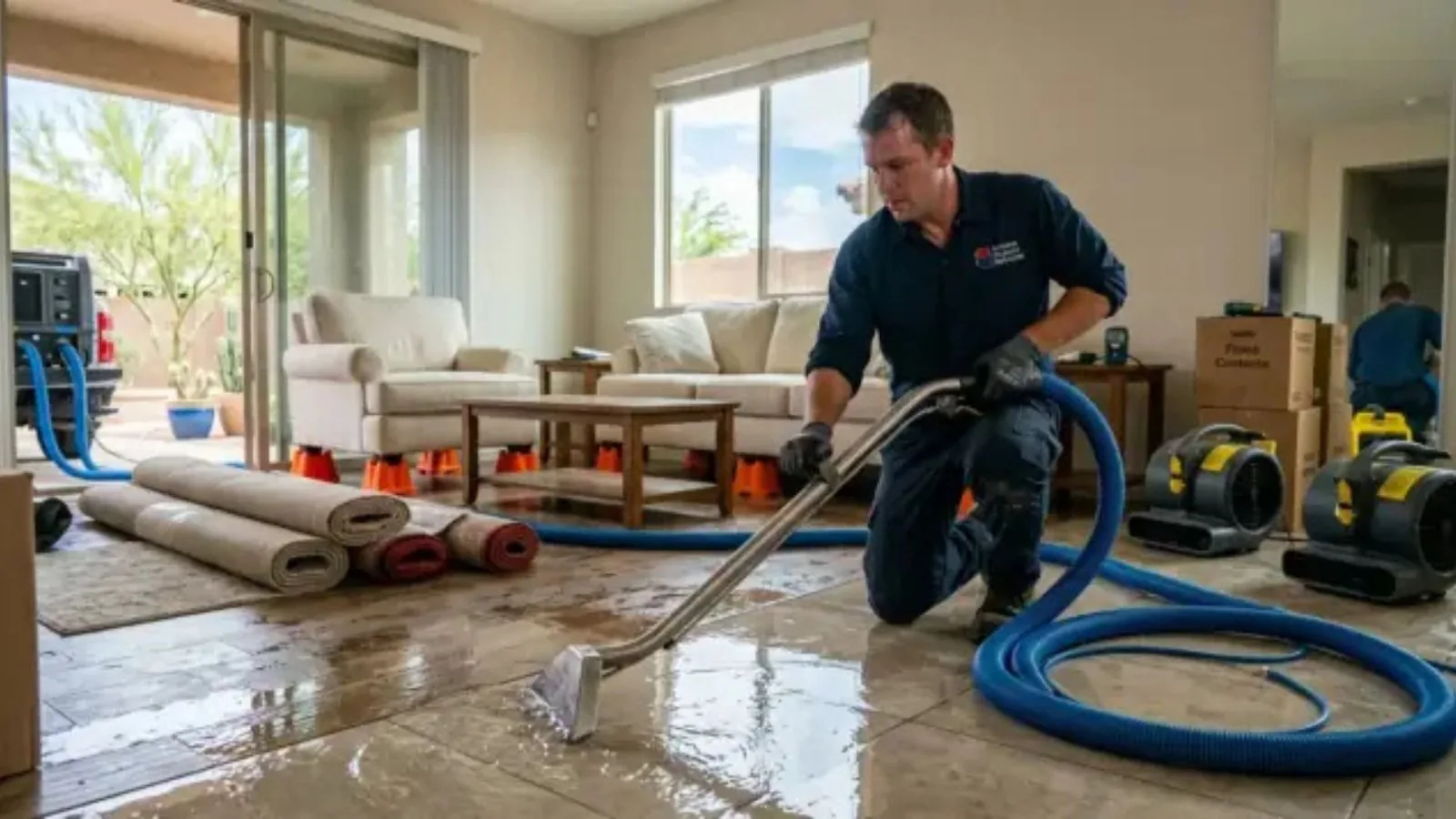
Emergency water extraction in Machesney Park, IL means getting standing water out of the building as fast as the situation safely allows. The 24/7 line is open now, and while you wait for a crew you can stop the source, shut off the main water valve and lift anything valuable off the floor.
Extraction is the first physical step of almost every water loss. Drying equipment can only work well once the bulk water is gone, so this page covers pumps, extraction units and what happens in the first hours.
When standing water is an emergency
Water that sits for even a day starts moving into baseboards, subfloors and the bottom of drywall. If the water came from a clean supply line, the clock is about speed. If it came from a drain, a sewer or outdoor flooding, the water may carry bacteria and the clock is about safety as well.
Keep out of any room where water touches outlets, power strips or the electrical panel. Cut power only if the panel is dry and easy to reach, and call the utility or 911 for any electrical or gas concern before calling the restoration line.
- Stop or isolate the source, and shut off the main water valve if a pipe or fixture is the cause.
- Lift small furniture, electronics, rugs and paper goods out of the water.
- Keep children and pets out of the wet area, especially if the water is cloudy or smells.
- Take photos and a short video before anything is moved. Your insurer will want them.
How extraction actually works
A restoration crew chooses the tool by water depth and floor type. Submersible pumps handle several inches of water in a basement, truck-mounted or portable extraction units pull water from carpet and pad, and wand extractors work flat floors one pass at a time.
Extraction does not dry a structure. It removes liquid water so that air movers and dehumidifiers, covered on the structural drying page, can pull out the moisture that stays inside wood, drywall and insulation.
| Situation | Typical tool | Why it fits |
|---|---|---|
| Several inches of standing water | Submersible pump | Moves large volume quickly and works in a sump pit or low corner |
| Soaked carpet and pad | Extraction unit with a weighted wand | Pulls water vertically out of fibers and cushion |
| Hard floors and tile | Wand extractor and squeegee | Collects thin films that pumps leave behind |
| Water under flooring | Injection or floor-mat drying | Reaches water trapped between layers |
What Machesney Park homes bring to the job
More than 58 percent of the village housing stock was built before 1980, according to the village 2040 comprehensive plan. Older homes often have original trim, plaster or older drywall and older subfloor materials, which can hold water differently than newer construction.
The same plan notes that a significant portion of the village lies within the 100-year floodplain of the Rock River. Homes near Harbor Oaks Drive, Shore Drive and the river bends deal with groundwater and flooding as well as plumbing failures, and each cause changes the safety steps. See flood damage cleanup when river or groundwater is the source.
Water damage in progress? Call the 24/7 line and ask what to do before anyone arrives.
☎ Call (815) 314-9281 nowClean water, gray water and sewage
The industry sorts water into three categories in the ANSI/IICRC S500 standard. Category 1 comes from a clean source such as a supply line. Category 2 carries some contamination, such as a washing machine drain. Category 3 is grossly contaminated, including sewage and river water.
The category decides what can be dried in place and what has to be removed. Porous materials soaked by Category 3 water are normally removed rather than dried. If a toilet or floor drain has backed up, read sewage backup cleanup before touching anything.
What affects the price of an extraction job
Price depends on facts that can only be seen on site, which is why scope and price are explained before work starts.
- Water category, since contaminated water adds safety steps and disposal.
- Depth of water and square footage affected.
- Floor materials, because carpet, pad, hardwood and tile are handled differently.
- How long the water has been sitting, which changes how much moisture is inside the structure.
- Whether drying and rebuild work follow the extraction.
No exact price belongs on a web page, because the same flooded basement can be a short job or a long one. If you want a real number for your property, call the 24/7 line and describe what you see.
Insurance and extraction
Sudden and accidental water damage, such as a failed supply line, is often covered by a homeowners policy. Gradual leaks and neglect often are not, and flood damage from rising water is usually excluded and needs separate flood coverage. Check your policy or ask your insurer before assuming either way.
The Illinois Department of Insurance advises photographing damage and contacting your agent as soon as possible. Keep receipts for any emergency work, and ask the restoration crew to document moisture readings and the scope in writing.
After the water is out
Once the bulk water is gone, the next questions are what is still wet and what has to come out. A moisture meter and thermal camera show where water traveled, sometimes behind a wall that looks dry. Hardwood, carpet and cabinets each have their own path forward, and the basement cleanup page covers the below-grade case in detail.
Homes in Loves Park, Roscoe and Rockford get the same first steps. If you live just outside the village, the Loves Park service page explains how nearby towns are covered.
Frequently asked questions
Response depends on crew availability and where you are. Same-day response is offered when available, and no arrival time is guaranteed. Call the 24/7 line, describe the water, and ask what to do while you wait.
A household shop vacuum can help with a small, clean spill. For anything deeper than a thin film, or for any water that may be contaminated, hand it to professionals. Never use a wet vacuum near standing water that touches outlets.
No. Extraction removes liquid water. Drying uses air movers and dehumidifiers over the following days, and the crew checks moisture readings until the structure is back to a dry standard.
Not always. Clean-water carpet can sometimes be extracted and dried in place, but the pad is often replaced. Contaminated water changes that answer and usually means removal.
Yes. The dispatch line is answered at night, on weekends and on holidays. Same-day response is offered when available, and the crew will tell you what to do for safety while the call is being routed.
Still deciding what to do next? The 24/7 line at (815) 314-9281 is answered at any hour, and you can describe the situation in plain words.