
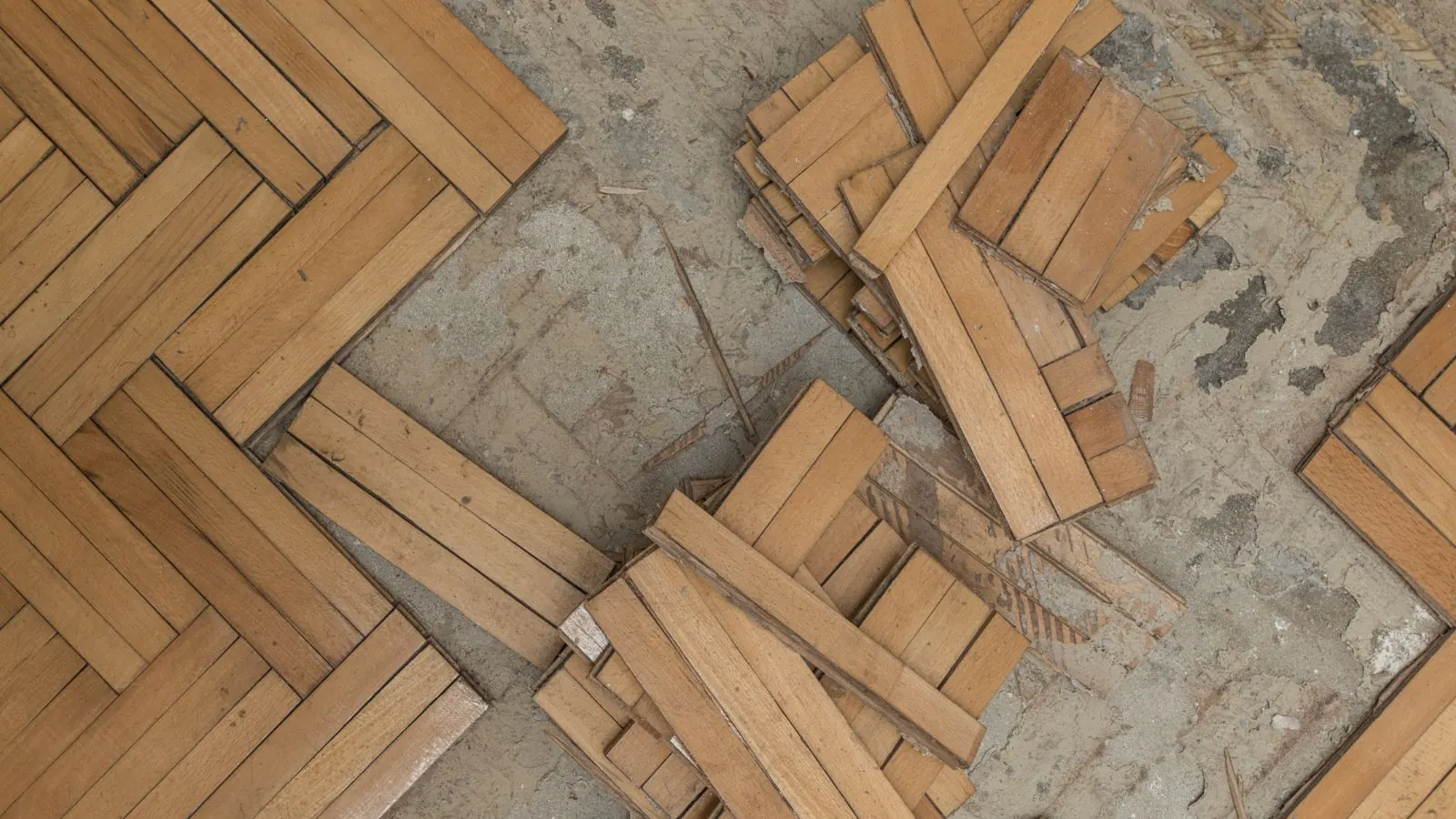
Hardwood floor water damage repair in Machesney Park, IL covers wood and laminate floors that have cupped, crowned, buckled or stained after a leak, flood or spill. Wood absorbs water and expands, so the first days decide whether a floor can be dried and refinished or has to come out.
If boards are lifting or the floor feels wet, keep furniture and foot traffic off it and call. Water under a floor often comes from a slab or a crawl space, which the slab leak and crawl space pages explain.
What hardwood water damage looks like
Cupping happens when board edges rise higher than the center because the underside absorbed more water. Crowning is the opposite, with the center higher than the edges, and it usually appears after a cupped floor is sanded while still wet. Buckling is when boards lift off the subfloor.
Dark stains, gaps between boards and a musty smell below the floor also point to moisture. Laminate swells at the seams and may bubble when water gets under the surface.
- Cupping: edges higher than the center.
- Crowning: center higher than the edges.
- Buckling: boards lifting off the subfloor.
- Gaps, dark stains or a musty smell near the floor.
First steps to protect the floor
Stop the water source, then remove standing water and mop up quickly. Take rugs, furniture and wet items off the floor so air can reach it. Do not wax or seal a wet floor, and do not use heat to speed drying.
Photograph the floor, the source and any moisture readings. If the floor is part of a flooded room, water extraction removes the bulk water before drying starts.
How wood floors are dried
Drying mats pull moisture from the top of the boards with suction while dehumidifiers remove it from the room. Small holes may be drilled in the subfloor to dry the cavity below, and injection systems can dry water trapped between layers.
Wood dries slowly and carefully. Drying too fast can cause cracking, so the crew monitors moisture and adjusts. Boards may take weeks to settle, and many cupped floors flatten as they dry.
Water damage in progress? Call the 24/7 line and ask what to do before anyone arrives.
☎ Call (815) 314-9281 nowSand and refinish or replace?
If a floor dries and the boards return close to flat, light sanding and refinishing can restore it. If boards are buckled, split or stained through, replacement of those sections may be needed. Engineered wood and laminate have thin surface layers and often cannot be sanded.
Wait until the floor is fully dry before deciding. Sanding a floor that still holds moisture can lock in damage. Ask for moisture readings before any refinishing work starts.
Cost factors
Floor repair cost depends on the material and the extent.
- Species and thickness of the wood, and whether it is solid or engineered.
- Area affected and whether the water reached the subfloor.
- Drying time and equipment such as mats and injection systems.
- Sanding and refinishing versus replacement.
- Whether mold has grown beneath the floor.
Scope and price are explained before work starts. A call to the 24/7 line is the best way to find out what your floor needs.
Insurance and flooring
Sudden water damage that harms a hardwood floor is often covered by a homeowners policy, while long-term moisture from a slow leak often is not. Your insurer may ask for moisture readings and photos, and may want to inspect the floor before repairs.
Keep samples of removed boards if asked, and get a written scope that separates drying from refinishing or replacement.
Wood floors in older village homes
Many Machesney Park homes date before 1980, and original oak floors are common in older houses of that era. Those floors are often thicker and can take more than one sanding, which gives them better odds of recovering from water than thin modern engineered planks.
Floors over a basement or crawl space can be hit from below. For finished basements, see the basement page. The carpet page covers the other common floor type.
Standards and sources behind this page
ANSI/IICRC S500 covers drying wood floors, including measuring moisture before and after. EPA guidance on drying within 24 to 48 hours explains why waiting to see whether a floor recovers is rarely wise.
Frequently asked questions
Often yes, if it is dried carefully and the water source is fixed. Do not sand until moisture readings show the floor is dry.
Laminate swells at the seams and usually cannot be dried back to its original shape. Small, quick spills may be fine, but soaked laminate is often replaced.
Often days to weeks, depending on the species, the thickness and the moisture. The crew takes readings over time rather than guessing.
Not always. Some floors dry in place with mats and dehumidifiers. If the water was contaminated or sat for a long time, removal may be the safer choice.
Still deciding what to do next? The 24/7 line at (815) 314-9281 is answered at any hour, and you can describe the situation in plain words.