
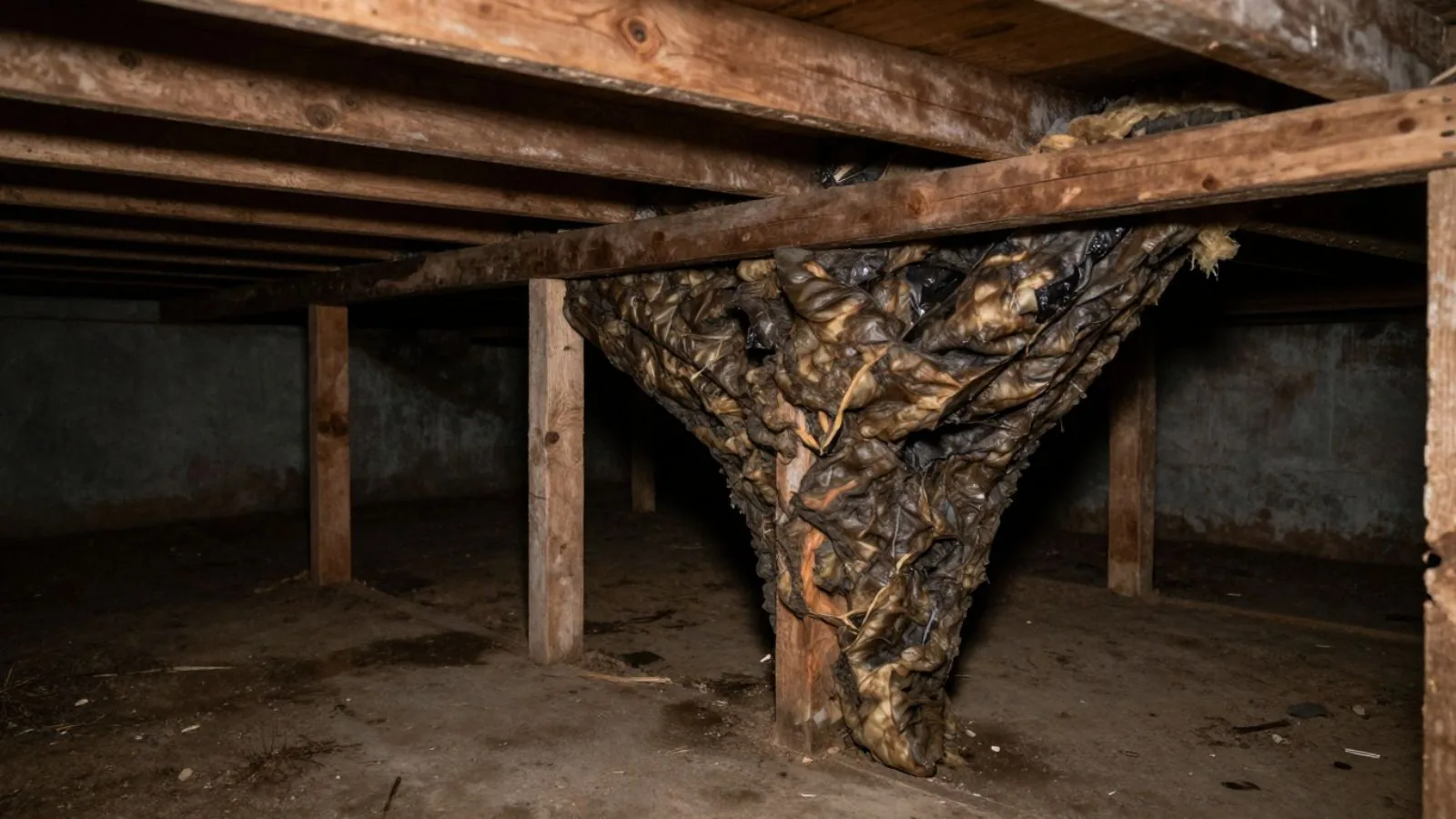
Crawl space water damage cleanup in Machesney Park, IL covers standing water, damp insulation and wet wood under the house. Crawl spaces are out of sight, so a leak can run for weeks before a musty smell or a cold floor gives it away.
Some homes and additions in the village have crawl spaces rather than full basements. If you can see water, close the main water valve in case a pipe is the source, then call the 24/7 line.
Signs of crawl space water trouble
Common signs include standing water, sagging insulation, a musty smell that rises through floor vents, cold or soft floors, and visible growth on joists. Check with a flashlight and keep your head clear of low wires and pipes.
Wear boots and a mask when entering, and never enter if water is near electrical outlets or a wiring run. A small space with water and electricity is a poor place to improvise.
- Standing water or wet soil.
- Insulation that has fallen or is dripping.
- White or dark growth on joists and the underside of the floor.
- Floors that feel soft, cold or bouncy above the space.
Where crawl space water comes from
Sources include plumbing leaks, groundwater that rises after heavy rain, surface drainage that runs toward the foundation, and condensation on cold ducts and pipes. The village 2040 plan states that a significant portion of Machesney Park lies in the 100-year floodplain of the Rock River, which can affect groundwater near the river.
Drainage and grading fixes are normally a contractor job, and your village Building Division can tell you which permits apply. Restoration handles cleanup and drying once the water source is controlled.
Cleanup steps under the house
The crew pumps standing water, removes wet insulation and damaged vapor barrier material, and cleans the space. Air movers and dehumidifiers then dry the joists and subfloor. Where mold is present, containment and removal follow the S520 standard.
After drying, a vapor barrier or encapsulation may be recommended to control future moisture. That is a separate project, and no company should push it before the structure is dry and the source of the water is known.
Water damage in progress? Call the 24/7 line and ask what to do before anyone arrives.
☎ Call (815) 314-9281 nowWhat drying looks like in a tight space
Crawl spaces are cramped, so equipment is smaller and the work is slower. Moisture readings on joists and the subfloor guide the process, and the goal is to dry framing to a safe level before the space is closed again.
If the floor above is wet too, the structural drying page explains moisture mapping and equipment. If the water came from a leaking pipe, see burst pipe water damage for the source side.
Cost factors
Crawl space jobs depend on size and conditions.
- Square footage and the depth of water.
- How much insulation must be removed and replaced.
- Whether mold is present.
- Access and working conditions, since tight spaces slow the work.
- Drying days, and any follow-up work such as a vapor barrier.
Scope and price are explained before work starts. Call the 24/7 line if you want to talk through what you found.
Insurance and crawl spaces
Sudden plumbing leaks are often covered, while groundwater seepage and long-term dampness often are not. Flood damage is excluded from homeowners policies and needs separate flood coverage.
Photograph conditions before cleanup and ask your insurer before work starts. A note on when you last looked at the space is useful if the loss is disputed.
Crawl spaces and older homes
More than 58 percent of village homes were built before 1980, and older crawl spaces often lack vapor barriers or have insulation that was never meant for damp conditions. No local count of crawl space homes is published, so check your own house.
If a leak also reached the living space, the carpet water damage page covers the floor above. Homes near Rockton can use the same first steps, and the Rockton page explains coverage there.
Frequently asked questions
Mold needs moisture to grow, and testing and removal follow the S520 standard. Health questions belong to a physician, so ask yours if anyone in the home has concerns.
A small damp area can sometimes be ventilated. Standing water, wet insulation or growth on joists need pumps, dehumidifiers and protective gear.
A barrier often helps control moisture from the soil, but it comes after drying and after the water source is fixed. Ask a contractor who will look at your space.
It depends on the policy and the type of structure. Ask your agent, since coverage for areas below the lowest floor can be limited.
Still deciding what to do next? The 24/7 line at (815) 314-9281 is answered at any hour, and you can describe the situation in plain words.