
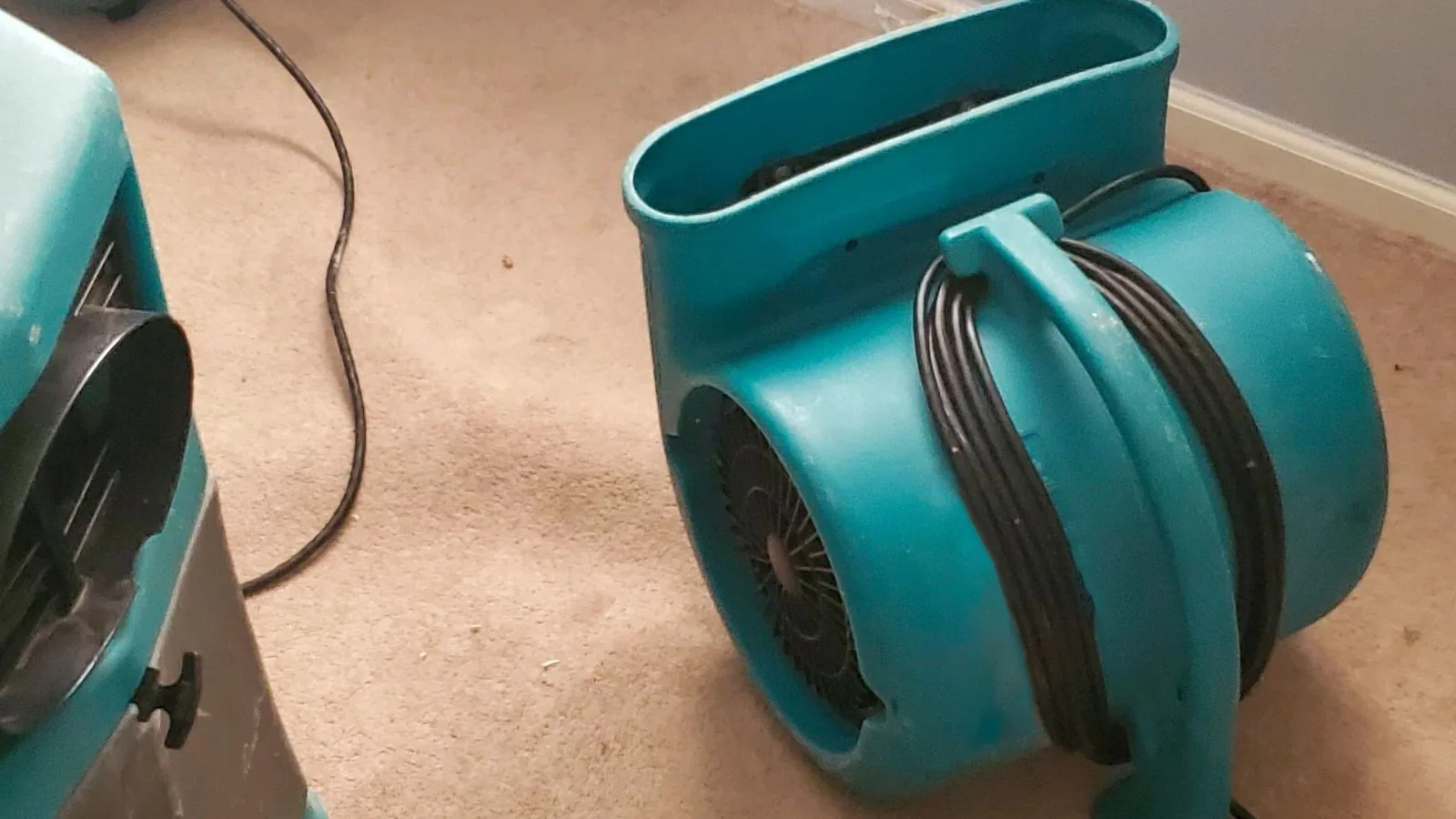
Structural drying and dehumidification in Machesney Park, IL is the process of removing moisture from wet walls, floors and framing after the standing water is gone. It uses moisture meters, thermal imaging, air movers and dehumidifiers, and it is how water mitigation is completed.
If a surface looks dry but feels cool, smells musty or keeps staining, it may still hold water inside.
Why do my walls still feel damp after the leak is fixed?
Walls that feel cold, baseboards that stay damp, or a floor that smells musty after a leak may still hold moisture. The trade term is structural drying, and it means measuring moisture and removing it with controlled airflow and dehumidification until readings return to normal.
What moisture mapping shows
Moisture mapping uses a meter and a thermal camera to find where water went. It marks wet areas on walls and floors and sets a dry reference from an unaffected room. The map guides where equipment goes and when it can come out.
Without mapping, drying is guesswork. Ask any company for readings at the start, at each visit and at the end, and keep them with your insurance file.
Equipment in plain words
Air movers push air across wet surfaces. Dehumidifiers pull moisture out of the air so the surfaces can keep releasing water. Low-grain refrigerant dehumidifiers work better at the low humidity needed for drying. Injection systems push air into wall cavities and under flooring.
The right mix depends on the materials and the size of the area.
| Equipment | What it does | Where it is used |
|---|---|---|
| Air mover | Moves air across wet surfaces | Floors, walls and carpet |
| LGR dehumidifier | Removes moisture from the air | The whole affected area |
| Injection system | Dries wall and floor cavities | Behind baseboards and under flooring |
| Moisture meter | Measures moisture in materials | Every visit |
Water mitigation and drying time
Water mitigation means limiting damage after a loss, and drying is its core. EPA guidance says to dry water-damaged areas within 24 to 48 hours to help prevent mold growth. How long full drying takes depends on the materials, the water category and the humidity.
Hardwood and plaster dry more slowly than drywall. Ask for a final reading that matches the dry reference, and do not close a wall or install new flooring until you have it.
Water damage in progress? Call the 24/7 line and ask what to do before anyone arrives.
☎ Call (815) 314-9281 nowWhat is not dried
Some materials are removed instead. Insulation, carpet pad and contaminated porous materials are usually replaced. Drywall that stayed wet for a long time is often cut out above the water line.
Removal speeds the drying of what remains. See water extraction for the step before drying, and sewage backup cleanup when the water was contaminated.
How the process runs day by day
On day one the crew maps moisture, sets equipment and records baseline readings. Over the next days they return to take readings, adjust equipment and move air movers as areas dry. When readings match the dry reference, equipment comes out.
Expect noise and some warm air while the equipment runs, and keep doors and closets open so air can circulate. Do not turn equipment off to save electricity without asking, because it can restart mold-friendly conditions.
Cost factors
Drying cost follows the size of the wet area and the duration.
- Area and materials that are wet.
- Number of equipment days.
- Water category.
- Containment needs for dust or contamination.
- Monitoring visits.
Scope and price are explained before work starts. If you want a real number, call the 24/7 line and describe the loss.
Insurance and documentation
Moisture logs, photos and equipment records support claims. Ask the company to give you copies. Sudden losses are often covered, and your insurer may ask for readings and a scope in writing.
Keep your own notes of dates and what you saw. If a claim is disputed, a record of drying readings is useful evidence.
Machesney Park humidity and drying
NWS normals for Rockford, 1991 to 2020, show 37.24 inches of precipitation a year, so outdoor humidity can be high in summer. Dehumidifiers matter more in humid months, and drying a basement in July takes more control than drying one in January.
Finished basements and older homes can dry more slowly. See the basement and carpet pages for those spaces.
Standards and sources behind this page
This work is defined by ANSI/IICRC S500, the published standard for water damage restoration. It covers water categories, equipment placement and the idea that drying is finished when readings match a dry reference.
Frequently asked questions
Often several days, and sometimes longer for hardwood, plaster or concrete. The crew takes readings at each visit and removes equipment when the readings match the dry reference.
Rental equipment is available, but measuring moisture and placing equipment matter. A professional can tell you whether a rental will be enough.
Usually yes, because drying works best when it runs continuously. The equipment is loud, so plan for noise.
Moisture readings match a dry reference taken from an unaffected part of the same house. Ask for the numbers in writing.
Still deciding what to do next? The 24/7 line at (815) 314-9281 is answered at any hour, and you can describe the situation in plain words.