
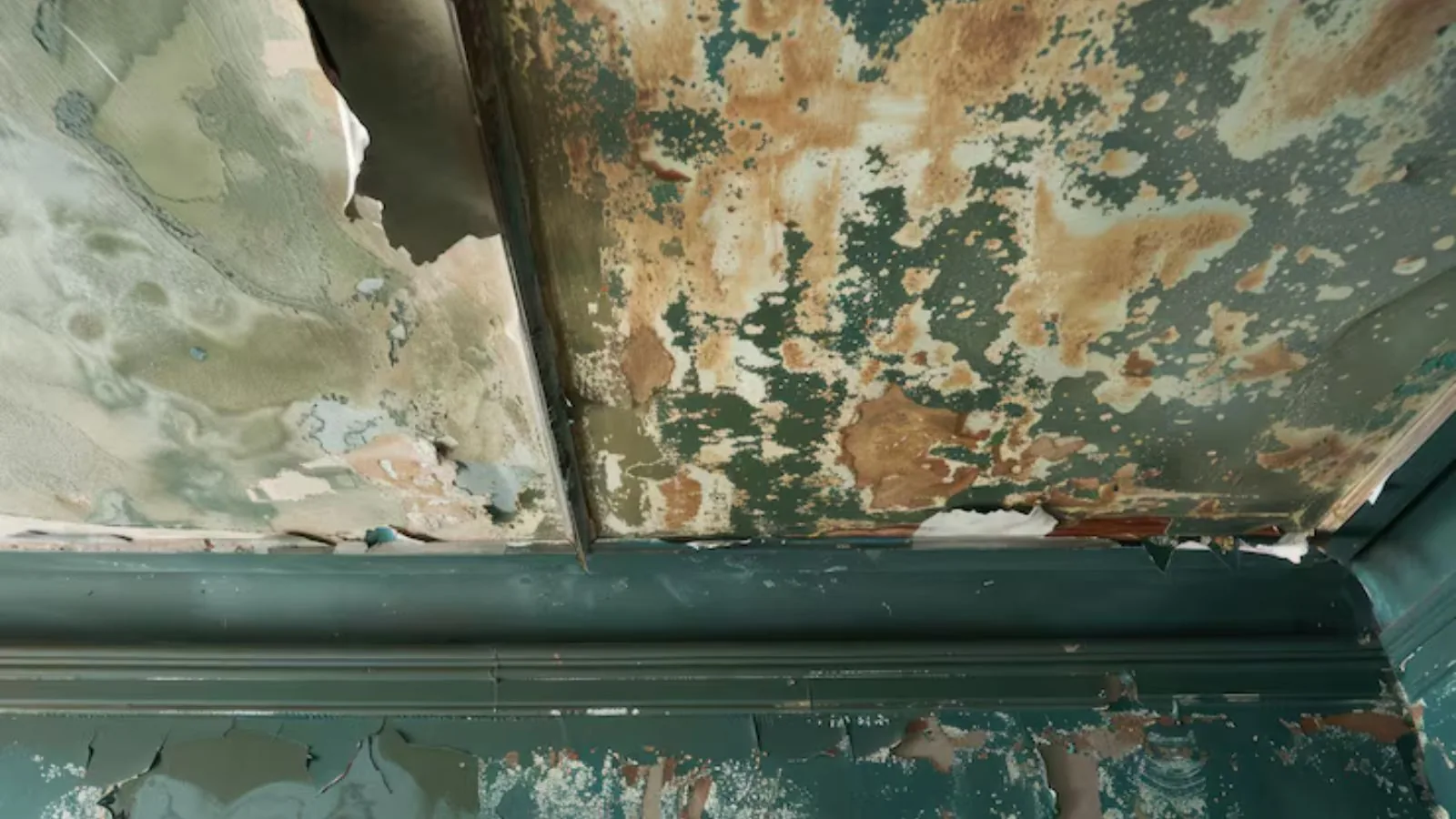
Bubbled paint is one of the most common early signs of moisture behind a wall or ceiling. It can also come from poor prep, humidity or heat. This guide helps Machesney Park, IL homeowners work out which one they have before painting over a problem.
The key question is whether the bubbled area is damp or wet inside. A quick check can tell you.
Why paint bubbles
Paint bubbles when something pushes it away from the surface beneath. Water vapor or liquid water moving through drywall or plaster is a common cause. Paint applied over dust, grease or a damp surface can also blister.
Heat from the sun or a hot pipe, and high humidity in bathrooms, add to the problem. The location of the bubbles often points to the cause.
Signs that point to water
Water is likely behind the paint in four cases. The bubble feels soft when pressed. A stain surrounds it. It keeps coming back after repainting. Or it sits below a bathroom, roof edge, window or plumbing wall.
- Soft or spongy feel under the bubble.
- A brown ring or stain nearby.
- Bubbles that return after repainting.
- Bubbles below a bathroom, kitchen or roof edge.
Signs that point to something else
If the wall is dry, hard and cool, the bubbles may come from poor surface prep, painting in humid conditions, or applying latex over oil paint without priming. Bubbles on a sun-facing wall may come from heat.
A moisture meter helps separate the causes. If you do not have one, press a tissue against the area overnight and see if it feels damp in the morning.
Water damage in progress? Call the 24/7 line and ask what to do before anyone arrives.
☎ Call (815) 314-9281 nowHow to test the wall
A pin-type moisture meter reads moisture in drywall and wood. A thermal camera shows cooler wet areas behind paint. For a simple check, tape a square of plastic wrap to the wall and look for condensation after a day.
Check the room above and the exterior wall too. Water often travels from a source that is not in the same room.
What to do about bubbled paint
Fix the source first. Let the area dry fully. Scrape off loose paint, sand the edges, prime with a stain-blocking primer and repaint. If the drywall is soft, cut out the bad section and replace it.
See the wall and drywall page for repair details and the ceiling page when the bubbles are overhead.
Comparison: bubbles from water versus other causes
This table summarizes the usual differences.
| Clue | Water behind the wall | Other cause |
|---|---|---|
| Feel | Soft, damp, cool | Hard, dry |
| Stain | Often present | Usually none |
| Returns after repaint | Yes | Often no |
| Location | Plumbing, roof, window | Sun wall, bathroom steam |
How long bubbled paint can stay hidden
Water behind paint can run for weeks before bubbles appear. By then the drywall behind it may already be soft and the framing may be damp. That is why a small bubble deserves a quick test even when it looks minor.
If the bubble is on a ceiling, check the room above. If it is on an exterior wall, check window flashing, siding and gutters.
Repainting the right way
Once the wall is dry and the cause is fixed, scrape loose paint back to firm edges, sand smooth, patch holes, prime with a stain-blocking primer and paint two coats. Skipping the primer lets old stains show through.
Wait to repaint until a moisture meter or a week of dry weather confirms the wall is dry. Painting early traps moisture and brings the bubbles back.
Quick tests you can do tonight
Press a flat hand on the bubble and on the wall beside it. A cold, clammy patch suggests moisture. Shine a flashlight across the wall at a low angle to see where the surface bulges. Mark the edges lightly with a pencil and check again in a few days to see whether it spreads.
Take a dated photo each time so you can show a contractor or insurer how the area changed.
Machesney Park note: winter condensation in older homes
The Village of Machesney Park 2040 Comprehensive Plan reports that more than 58 percent of village homes were built before 1980 and that a significant portion of the village lies in the 100-year floodplain of the Rock River.
Older homes with weaker insulation can see condensation on cold exterior walls in winter. If bubbles appear on north-facing walls in January, ask whether humidity or an ice dam is a factor before assuming a plumbing leak.
When to call a professional
Call if the area is larger than a dinner plate, if the wall is soft, if you smell mold, or if the bubbles return. A moisture survey costs less than replacing a wall that has been wet for months.
Homes near Roscoe and Rockton are covered by the same 24/7 line.
Frequently asked questions
No, but moisture is a common cause. Test the wall before repainting.
You can scrape loose paint, but the cause remains. Find the source first.
Stain-blocking primer helps after the wall is dry and the source is fixed.
If the area is damp for days, mold can start. Dry it quickly.
Winter steam meets cold exterior walls and can condense. A working bathroom fan vented outside helps. If the paint is soft or stained, check for a leak as well.
Still deciding what to do next? The 24/7 line at (815) 314-9281 is answered at any hour, and you can describe the situation in plain words.