
Mold on walls usually means moisture is reaching the wall from inside or outside. Cleaning the surface helps only if the water problem is fixed too. This guide covers wall types common in Machesney Park, IL homes and explains what is safe to do yourself.
It follows EPA guidance. Large patches and sewage-related mold need a professional.
Check why the wall is damp first
Look for a plumbing leak, a roof or window leak, a cold exterior wall with condensation, or poor bathroom ventilation. Without fixing the source, cleaning is temporary.
Press the wall. If it feels soft or crumbles, the drywall has absorbed water and may need replacement. See the wall and drywall page.
Painted drywall
Drywall is porous. Light surface mold on painted drywall may be cleaned with detergent and water and dried quickly. If mold has gone through the paper or the drywall is soft, cutting out the section is better than cleaning.
Paint over cleaned drywall only after the wall is fully dry. A stain-blocking primer helps hide marks but does not stop moisture.
Tile, grout and sealed surfaces
Hard, non-porous surfaces like tile and glazed paint clean well with detergent and water and a scrub brush. Grout is porous, so heavy staining may need regrouting.
Run the bathroom fan during and after showers, and wipe wet walls when you can.
Water damage in progress? Call the 24/7 line and ask what to do before anyone arrives.
☎ Call (815) 314-9281 nowBasement concrete and block walls
Masonry walls can hold moisture and show mold at the base. Scrub with detergent and water, dry with fans and a dehumidifier, and look for the cause such as seepage, a failing gutter discharge or high humidity.
For wet basements, see the basement page.
Safety steps
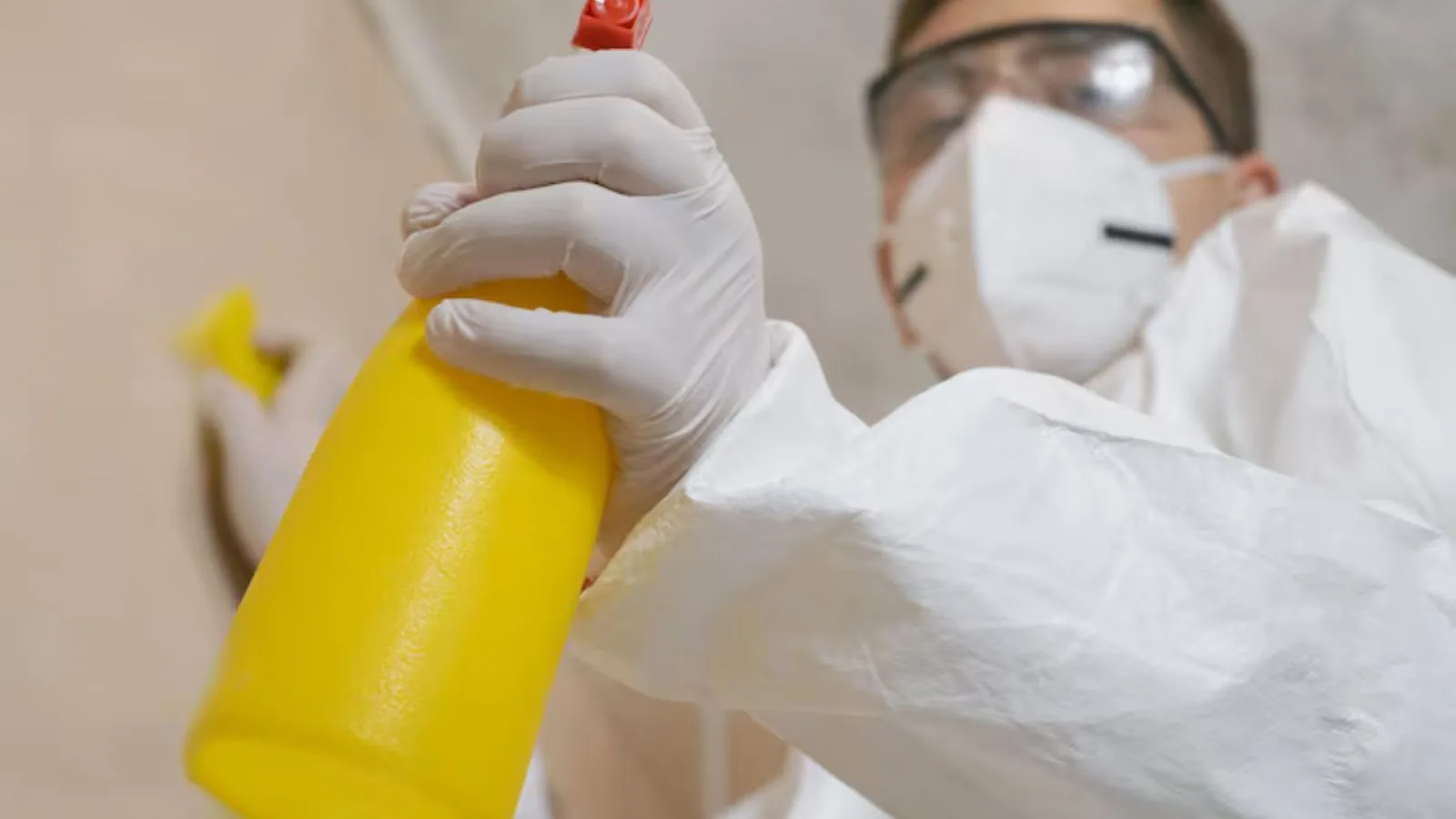
The EPA suggests gloves, goggles and an N-95 respirator if possible, and says most people can clean an area under about 10 square feet themselves. Ventilate the area, keep children and pets away, and never mix bleach with ammonia.
Do not dry-scrape or sand moldy surfaces, because that sends particles into the air.
- Fix the moisture source.
- Wear protection and ventilate.
- Scrub with detergent and water.
- Dry completely.
- Replace porous materials that stay stained or soft.
When to hire a professional
Call when the mold covers more than about 10 square feet, when the wall is soft, when water was sewage, or when you have health concerns. A professional sets containment, uses HEPA filtration and removes affected materials.
The mold remediation page describes that process.
Why mold shows up on exterior walls first
Exterior walls are cooler than interior air, so moisture condenses on them in winter. Behind furniture, air barely moves, and the cold surface stays damp. That combination often grows mold in corners and behind dressers.
Pull furniture a few inches from exterior walls, keep closets ventilated and run a dehumidifier in damp rooms.
After the cleanup
Check the wall again after a week and after the next rain. If the stain or smell returns, moisture is still reaching the wall. Look for a leak, failed caulk, a missing gutter or humid air with nowhere to go.
Record what you find and when. If you need a professional later, that history helps them find the cause faster.
When the wall should come out
Drywall that stays soft, stained or musty after drying is a candidate for removal. Cut back to clean, dry material, usually a foot or more beyond the visible edge, and check the framing behind it. Wear protection and bag debris before carrying it out.
If the area is larger than about 10 square feet or you find damp insulation, bring in a professional rather than cutting it yourself.
Cleaning supplies and disposal
You need detergent, water, a stiff brush, disposable rags, heavy trash bags, gloves, goggles and a respirator. Bag moldy rags and removed material before moving them through the house, and put the bags out with regular trash unless local rules say otherwise.
Wash reusable tools in hot soapy water and let them dry fully outdoors.
Machesney Park note: Illinois mold rules are still developing
The Illinois Department of Public Health says Public Act 103-0893 does not take effect until rulemaking is adopted, and that professionals are not currently required to register with IDPH.
Ask any mold contractor to explain its process in writing and check the IDPH website for current status.
Preventing regrowth
Keep indoor humidity under control, vent kitchens and bathrooms, clean gutters, and fix leaks promptly. Dry any wet materials within 24 to 48 hours.
Homes in Rockford and Roscoe face the same seasonal humidity changes.
Frequently asked questions
No. Clean and dry first, and fix the moisture source.
EPA guidance does not recommend bleach as routine cleanup. Detergent and water with drying is the standard approach.
A moisture meter confirms it. Without one, wait several days with air movement and check again.
Moisture is still present. Look for leaks, condensation or humidity.
Basements with moisture problems can. With a village plan noting older homes and a nearby river floodplain, checking drainage and humidity is a smart habit.
Still deciding what to do next? The 24/7 line at (815) 314-9281 is answered at any hour, and you can describe the situation in plain words.