
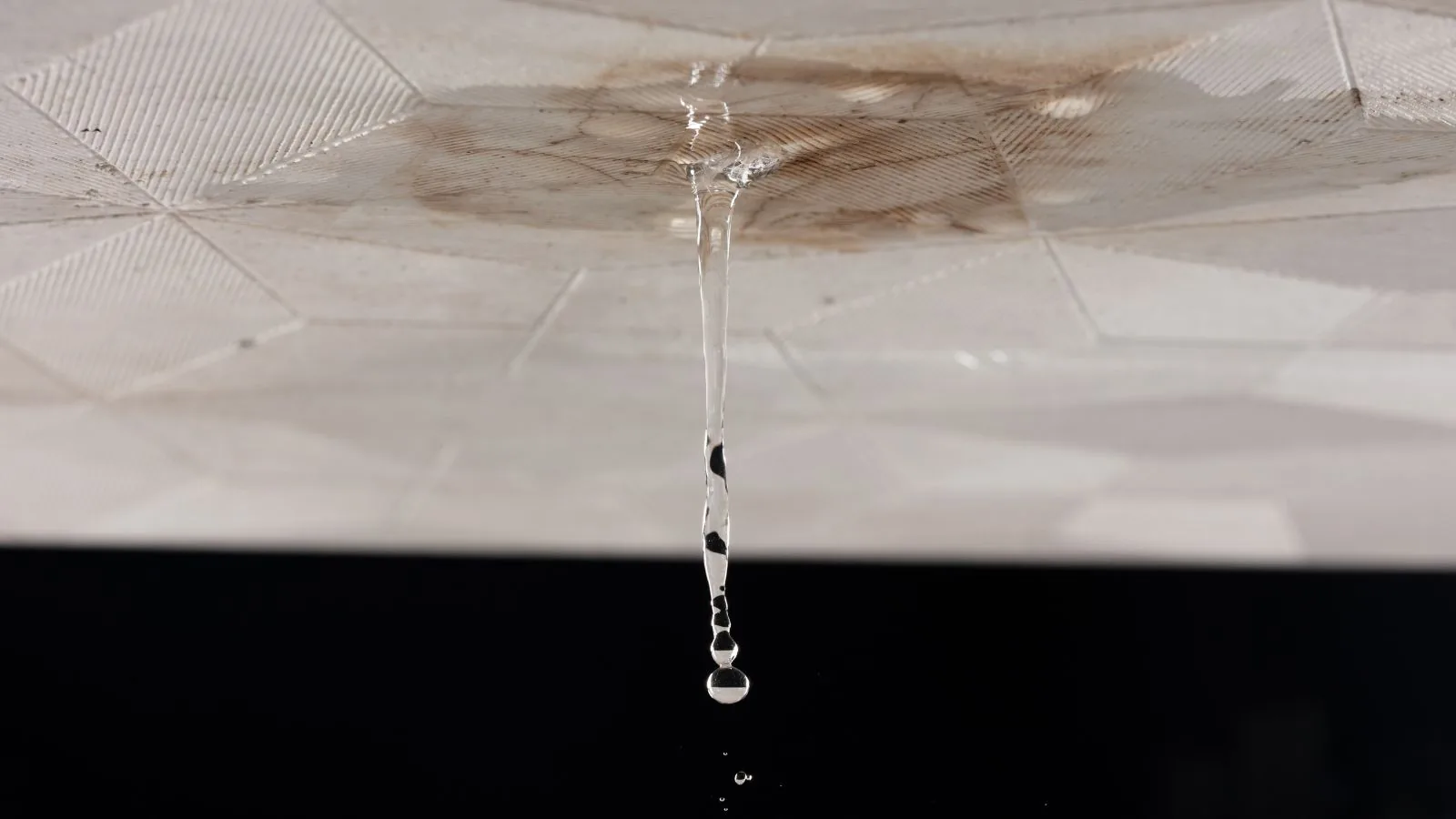
Water damage rarely starts with a flood. More often it begins as a faint stain, a musty smell or a soft spot in the floor. Catching those clues early can mean a small repair instead of a large one. This guide lists the signs of water damage to look for in Machesney Park, IL homes.
If you find several signs in the same area, assume the source is still active and look for it before cleaning.
Visual signs on walls and ceilings
Stains are the classic clue. Brown or yellow rings, often with darker edges, show where water has passed through. Paint that bubbles, peels or cracks suggests moisture behind it. Drywall that sags or feels soft has absorbed water.
A stain that grows after rain points to a roof or exterior source, while a stain that grows with no weather change suggests plumbing.
- Brown or yellow stains with ring edges.
- Bubbled, peeling or cracked paint.
- Sagging or soft drywall or ceiling panels.
- Visible mold or mildew in corners or on trim.
Smell and sound
A musty smell that does not go away is one of the most reliable signs of hidden moisture. It often appears before any stain. Check closets, cabinets, basements and areas near plumbing.
Sounds can help too. A dripping or hissing sound inside a wall, or a pipe that knocks, points to a plumbing problem you cannot see.
Floor clues
Floors show water in different ways. Wood floors cup or buckle. Laminate swells at the seams. Vinyl lifts at the edges. Tile feels loose or has cracked grout. Carpet feels damp even when the room is dry.
See the hardwood floor page and the carpet page for how each floor reacts and how drying works.
Water damage in progress? Call the 24/7 line and ask what to do before anyone arrives.
☎ Call (815) 314-9281 nowClues in the utility bill and meter
A water bill that rises with no change in habits is a classic sign of a leak. You can test by turning off all water use and checking whether the meter still moves. If it does, water is going somewhere.
Flat spots in the lawn that stay wet, or a damp patch near the foundation, can point to a leak in a buried line.
Where hidden leaks tend to start
Check around toilets, under sinks, behind the washing machine and refrigerator, around the water heater, near the air conditioner drain, and along exterior walls under windows. Look in the attic for stained decking after storms.
These spots are common in any house. Walk them once a season and note anything new.
| Sign | Likely source | Where to look |
|---|---|---|
| Ceiling stain | Roof or upstairs plumbing | Attic, bathrooms above |
| Musty basement | Seepage or humidity | Walls, sump pit, floor drain |
| Soft floor near sink | Supply line or drain | Cabinet base, toe kick |
| Warm spot on floor | Hot water line leak | Slab or crawl space |
| Rising water bill | Hidden leak | Meter, toilets, lines |
What to do when you spot a sign
Find and stop the source first. Photograph what you see. Dry the area within 24 to 48 hours if possible, because mold needs moisture to grow. If the area is larger than a small spot or you cannot find the source, call a professional.
The slab leak page and burst pipe page cover two common hidden causes.
Signs that appear after a storm
After a heavy storm, check the attic for damp insulation or stained decking, look at ceilings under the roof for fresh marks, and check the basement for new damp patches or a water line on the wall.
Also walk the outside of the house. Gutters that overflow, downspouts that dump next to the foundation and soil that slopes toward the walls all send water where it should not go.
A simple monthly walk-through
Pick one day a month and walk through the house with a flashlight. Look under sinks, behind the toilet, around the water heater, in the basement corners and at the ceiling under bathrooms. Touch the walls where stains have appeared before.
Five minutes a month turns a surprise into a small repair. Write the date and what you saw in your phone notes so you can compare over time.
Machesney Park note: homes built before 1980
The Village of Machesney Park 2040 Comprehensive Plan reports that more than 58 percent of village homes were built before 1980 and that a significant portion of the village lies in the 100-year floodplain of the Rock River.
Older homes tend to have older plumbing, older roofs and basements that have seen decades of seasonal moisture. That is a reason to walk through the checks above once a year, especially after the spring thaw.
When to call for help
Call if water keeps returning, if you see signs in more than one room, if a stain is larger than your hand, or if you smell mold. A moisture meter and thermal camera can find water you cannot see.
Neighbors in Loves Park and Rockford can use the same 24/7 line.
Frequently asked questions
Only after the source is fixed and the area is fully dry. Painting over wet material traps moisture.
Weeks or months. Leaks inside walls and under floors often go unseen until stains or smells appear.
It can be. The stain shows only the surface, and the wet area behind it may be larger.
Moisture meters and thermal cameras show wet areas behind paint and under flooring.
A little humidity can be common, but wet walls, standing water or a persistent musty smell are not normal. The village is next to the Rock River, so check drainage and sump function.
Still deciding what to do next? The 24/7 line at (815) 314-9281 is answered at any hour, and you can describe the situation in plain words.