
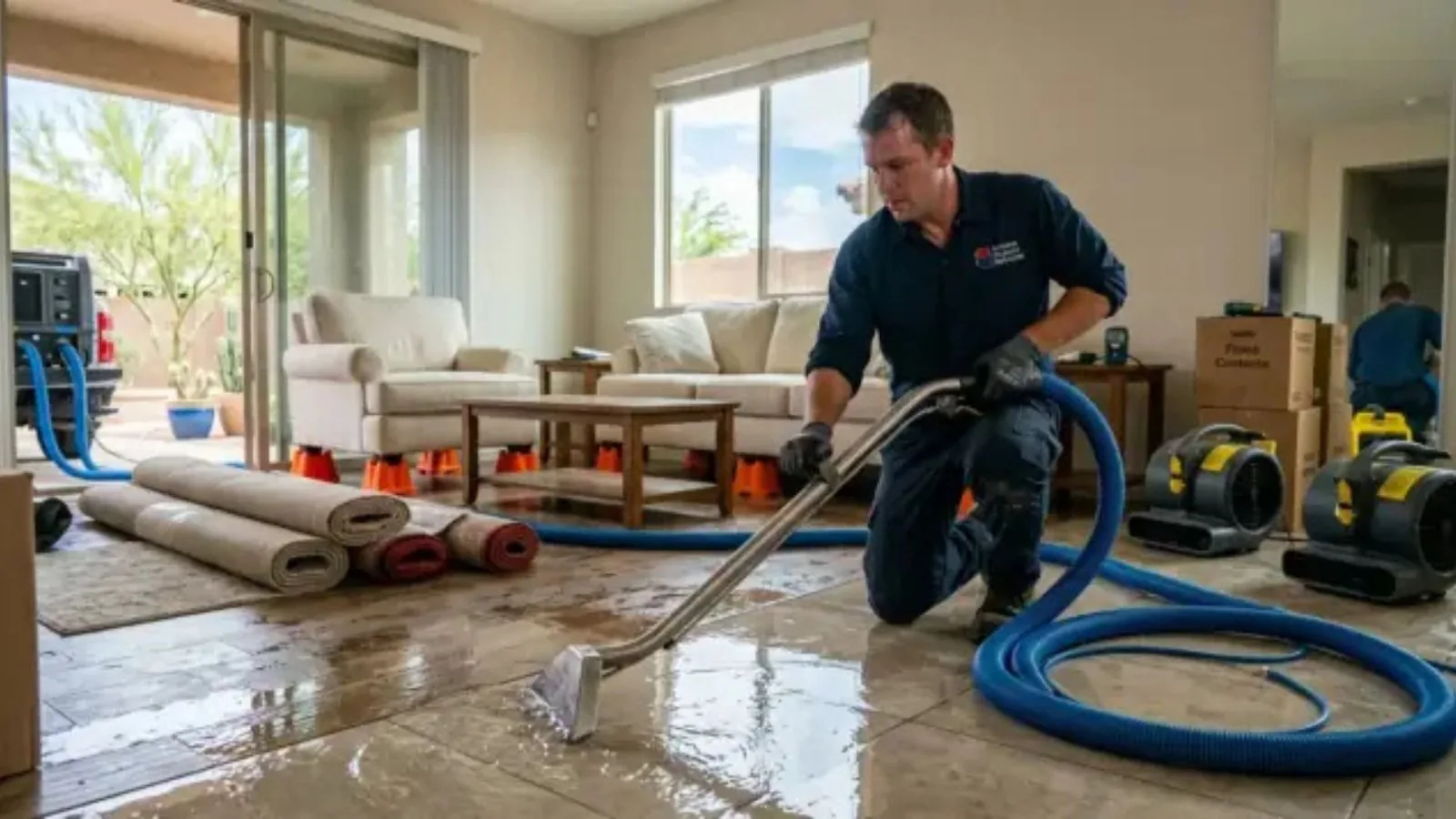
When water damages your home, the first hours are busy and a claim is easy to mishandle. The steps below follow guidance from the Illinois Department of Insurance and common restoration practice. They are meant for homeowners in Machesney Park, IL who want a clear order of operations.
This is general information. Your policy and your insurer decide what is covered, and the claim rules in your policy apply to you.
Step 1: Make the situation safe
Stop the source of the water if you can. Close the nearest shutoff or the main valve. If water is near outlets or the panel, stay away and cut power only from a dry spot. Safety comes before photos.
If the water came from sewage or river flooding, keep people and pets out of it and call for help rather than cleaning it yourself.
Step 2: Photograph before you clean
The state guide says to take photos of all damage before cleaning or repairing. Capture wide shots of each room, close shots of damaged items, the source of the water, and any visible water lines.
Add video if you can. Slow walk-throughs with narration are easy to make and easy for an adjuster to follow.
Step 3: Report the loss promptly
Contact your agent or insurer as soon as possible, because most companies require timely reporting. Write down the claim number, the date, and the name of the person you spoke with.
Ask what they need from you and whether they want to see damaged materials before disposal.
Water damage in progress? Call the 24/7 line and ask what to do before anyone arrives.
☎ Call (815) 314-9281 nowStep 4: Protect the property from further damage
Policies usually expect you to take reasonable steps to limit further loss. That can include removing standing water, running fans, and drying affected areas within about 24 to 48 hours, which is also the window that helps limit mold growth.
Keep all bills and receipts for emergency work. Professional drying is a reasonable step when water is widespread. The structural drying page explains the process.
Step 5: Hold large repairs until the adjuster inspects
Illinois guidance says to make only reasonable repairs to protect the property and not to make large or permanent repairs until your insurer has inspected the damage. Do not sign repair contracts until the adjuster has approved the scope.
Keep damaged items that the adjuster may want to examine, unless they pose a health risk.
Step 6: Keep a claim log and read the estimate
Record each conversation with the date, the adjuster name and the phone number. Ask for a copy of the damage estimate and compare it with your restoration scope.
For personal property, the state guide notes that actual cash value is paid first and the remaining difference is paid after you replace items with replacement cost coverage. Policies set a deadline for replacement, and you can ask for an extension.
What a good claim file looks like
A strong file is simple. It holds dated photos and video, a list of damaged items with approximate age and value, receipts for emergency work, the claim number, a log of calls, and the restoration scope with moisture readings.
Keep it in one folder on your phone or computer, and back it up. If something is disputed later, a tidy file saves hours.
Mistakes that slow claims down
A few habits cause most of the trouble. People throw away damaged items before photographing them. They sign repair contracts before the adjuster inspects. They wait days to report. Or they make permanent repairs that hide the cause.
Avoid all four and the process tends to move more smoothly. When in doubt, call your insurer and ask before you act.
Machesney Park note: floodplain and older housing
The Village of Machesney Park 2040 Comprehensive Plan reports that more than 58 percent of village homes were built before 1980 and that a significant portion of the village lies in the 100-year floodplain of the Rock River.
If your loss involved river or groundwater, a flood policy is a separate document from your homeowners policy. Ask your agent which policy your claim belongs under before you start repairs.
If you disagree with the result
Try to resolve it with your insurer first. Check your policy for an appraisal clause if the dispute is over value. You can also consider an attorney or a licensed public adjuster, who usually charges a percentage of the settlement.
The Illinois Department of Insurance accepts consumer questions and complaints about claims. See the Roscoe and Rockton pages if you are outside the village limits.
Frequently asked questions
As soon as possible. Most companies require timely reporting.
Photograph them first and ask the adjuster whether they want to see them. Discard items that pose a health risk.
It can. Reported claims, paid or not, may be recorded, so weigh the damage against your deductible and ask your agent.
Crews provide moisture readings and scope documents. Your insurer decides coverage.
Permit and inspection rules vary by project. Ask the village Building Division before starting structural repairs, and ask your insurer what documentation it wants.
Still deciding what to do next? The 24/7 line at (815) 314-9281 is answered at any hour, and you can describe the situation in plain words.